Season by Season
Wesley Chapel sits in a mild temperate band, so you don't get the hard freezes that crack rubber seals outright or the deep sub-zero nights that cause thermal shock in the door frame. The wear here comes from something slower: humidity swings and summer heat cycling the slab and the steel day after day. Spring and early summer bring the heaviest rain, and that's when a tired bottom seal starts letting water track under the door instead of just air. By late summer, UV and sustained heat have usually finished softening vinyl seals, so they stop sealing flush well before they look cracked from the driveway. Fall and winter are the quiet months - no ice, no snow load pressing on the track - so a seal problem you put off in July is still sitting there in January, just drier and a little worse. Because there's no single violent weather event that forces the issue, draughts here tend to get ignored longer than they would somewhere with a real winter. That's the trade-off of a mild climate: nothing fails all at once, but nothing fixes itself either.
When to Call Someone
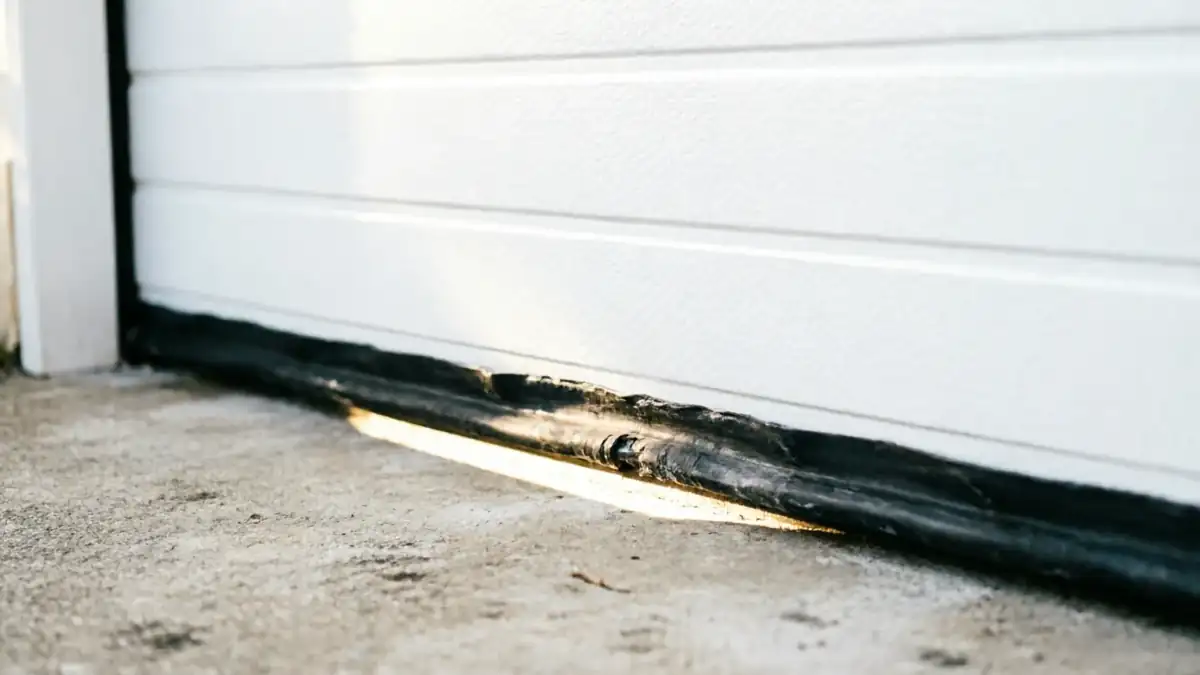
If you feel air moving at the bottom corners of a closed door on a still day, that's not a drafty garage - it means the seal has pulled away from the slab or shrunk enough to leave a gap. Daylight showing along the bottom edge is the clearest tell, and it's usually a same-visit fix. Call sooner if the draught shows up alongside water coming in after rain, because standing water under the door on an older slab often means the gap is wider on one side than the other, which points to a track or roller problem rather than just the seal. One honest limit here: if the door itself has warped or the bottom panel has rusted through, a new seal won't seal against a surface that isn't flat anymore, and that's a panel or door conversation, not a seal swap.
How Local Conditions Play In
This part of the county covers roughly two dozen named areas, from close-in sections like out to places ten-plus miles off, and most of that housing landed in the same 1980s-to-90s construction window. That means a lot of doors are hitting worn-seal age at roughly the same time rather than being spread evenly across decades. With 130,044 households and more than 51,000 owner-occupied houses in the broader service area, that concentration adds up to a steady, predictable run of seal calls rather than a seasonal spike. The mild climate band keeps failures from being sudden - you won't get a seal that splits overnight from a freeze - but the constant heat-humidity cycle still breaks vinyl down year after year. The practical result: age of the house tells you more about seal condition here than the time of year does.