What You Are Seeing
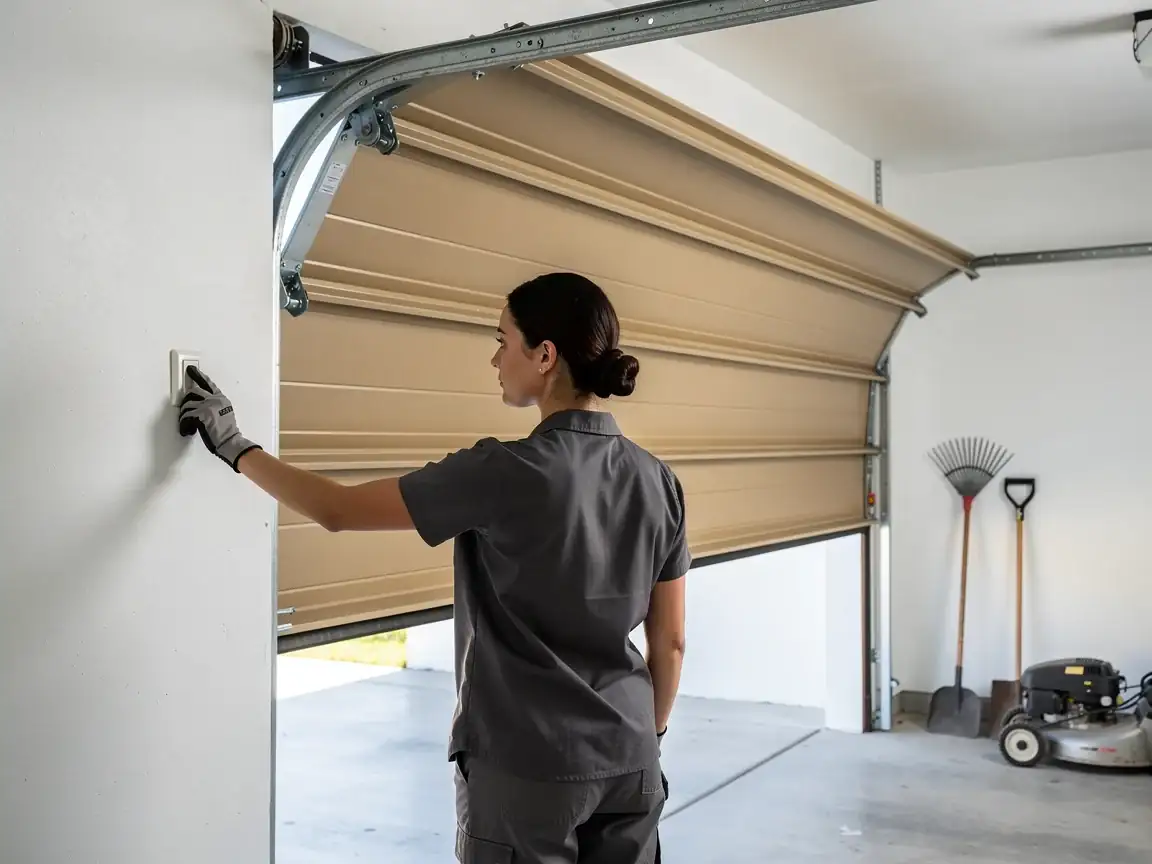
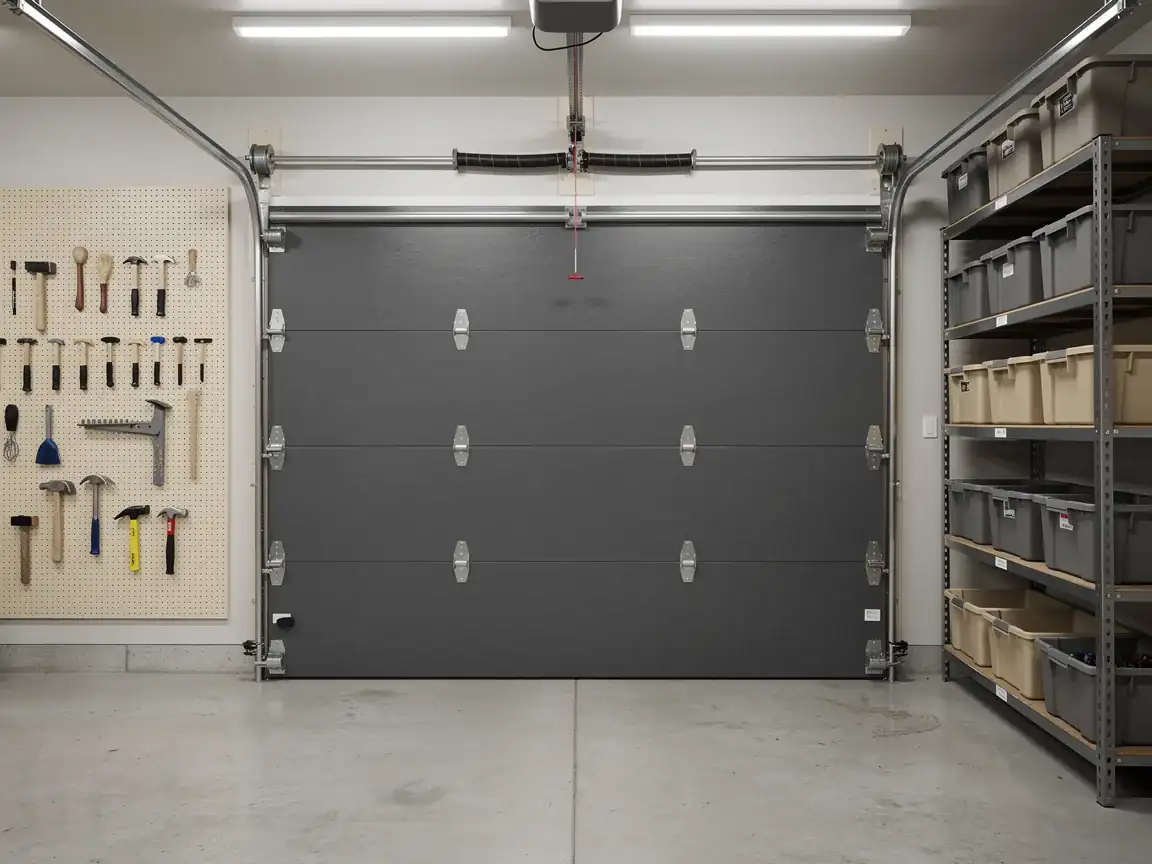
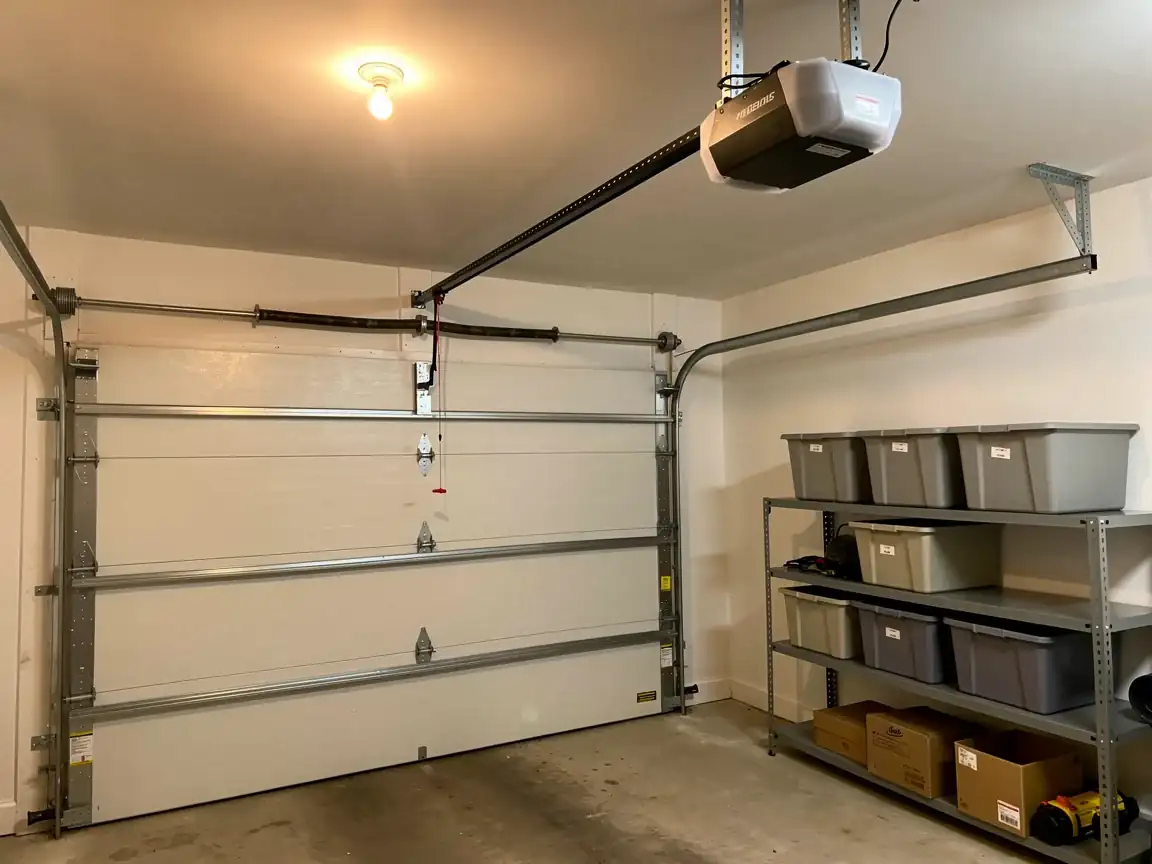
The door sits crooked in the opening, higher on one side than the other, or it stops moving a few inches up and won't budge either direction. Sometimes there's a loud bang first, then the door just hangs there. You might see a roller sitting outside the track instead of inside it, or the track itself pulled away from the wall bracket on one side. If you try the opener anyway, it strains, clicks, or reverses on its own - that's the safety sensor or the motor refusing to fight a door that's no longer riding straight.
This is different from a door that's merely noisy or slow. An off-track door has a roller, a hinge, or a track bracket that has physically separated from where it's supposed to be, and the cables and springs are now pulling on a door that isn't aligned to take that load evenly. That uneven pull is what bends panels and snaps cables if the door keeps getting forced.
Most homeowners notice it first thing in the morning, when the door has sat still overnight and a bracket that loosened the day before finally lets go under the cold-start tension. It rarely fixes itself, and running the opener through it again almost always makes the damage worse, not better.
What Can Go Wrong
A roller that's worked its way out of the track is the simplest version - annoying, but usually a contained problem. Left alone, the door keeps riding on an angle every time it opens, which wears the track lip and the roller stem faster each cycle. Within a few more openings, that stem can snap, and now the door drops unevenly on one cable while the other side holds, which is how panels crack and corners cave in.
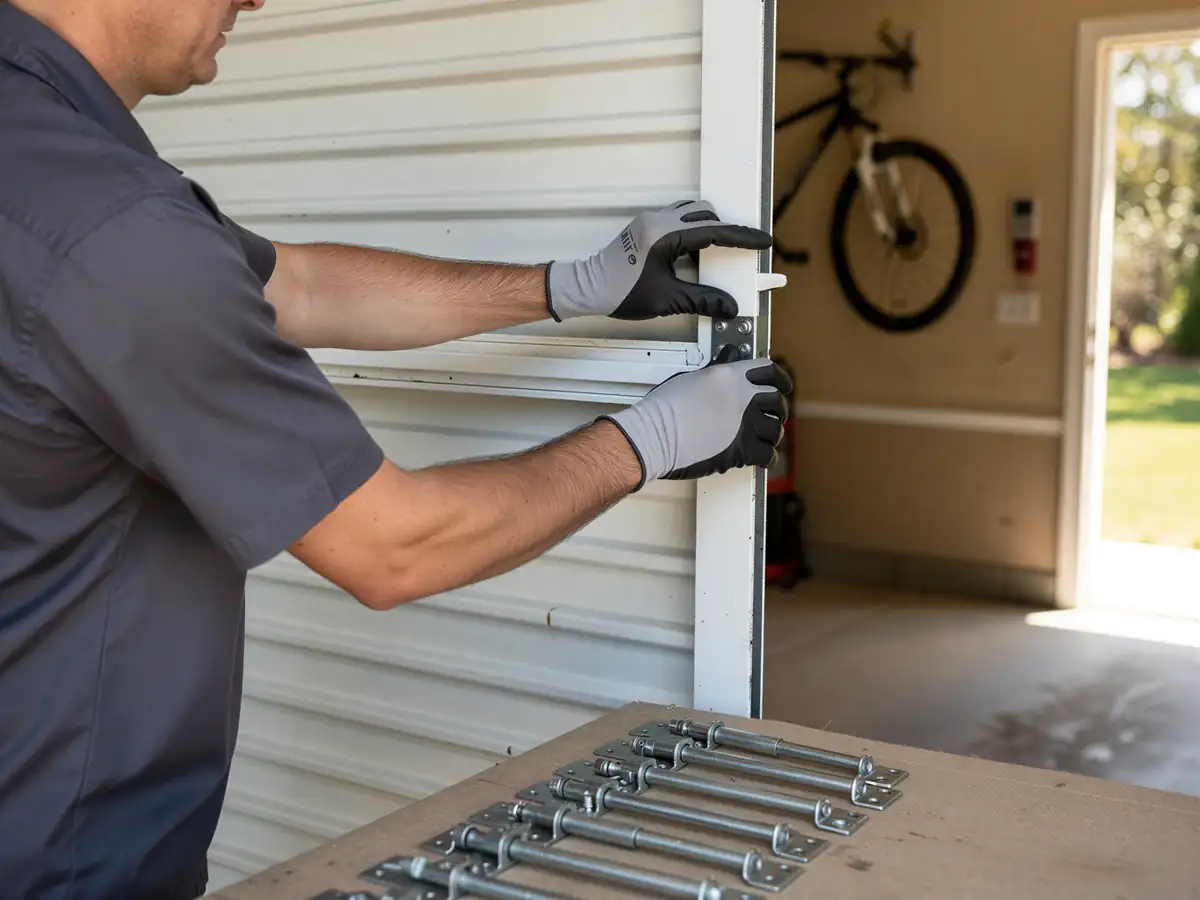
A bent track is a harder problem. Once the aluminum or steel track has a kink in it, the rollers don't glide through it cleanly no matter how many times you push them back in - the door will come off again, usually at the same spot, until the bent section is replaced. Bracket screws that have pulled loose from the framing are another common culprit, especially after repeated forcing with the opener; the bracket can tear out further and take a chunk of the jamb with it.
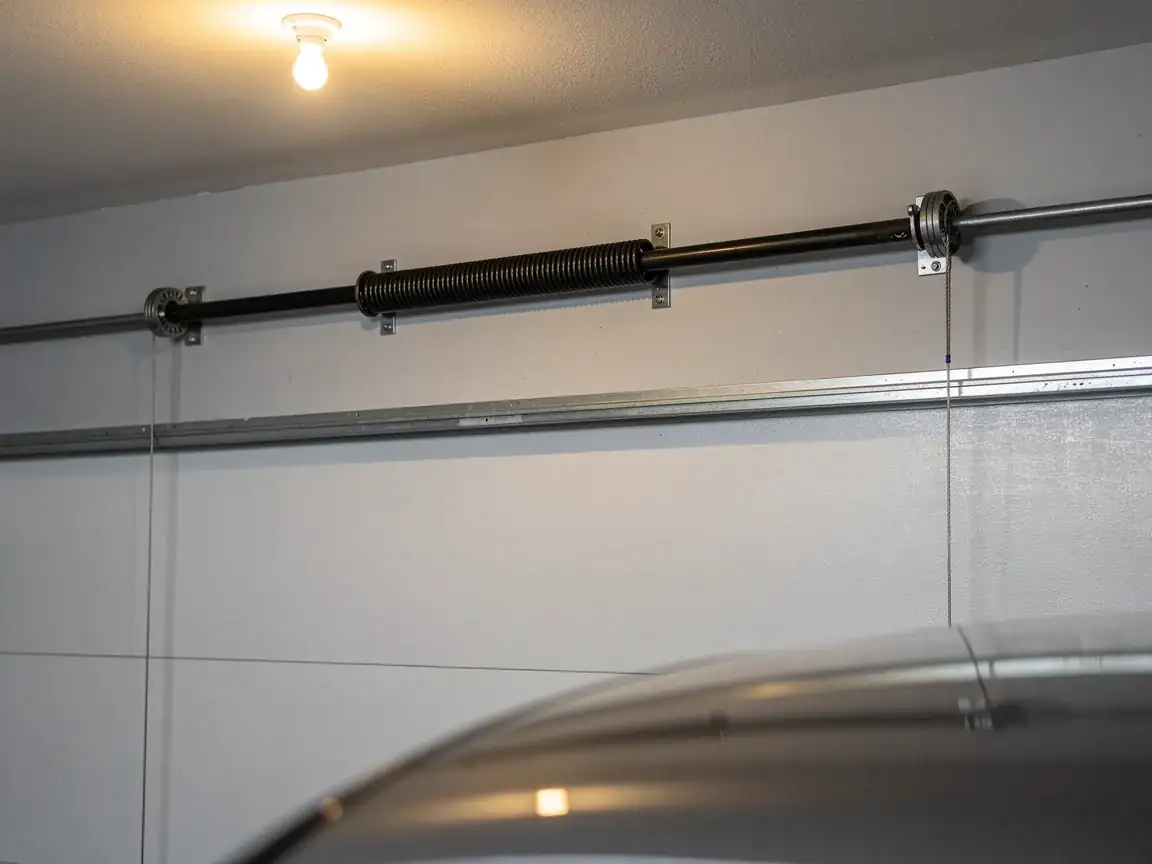
The real risk is the spring system. An off-track door that's still under full spring tension is storing energy with nowhere safe for it to go if something else gives - a cable, a stretched spring, a stripped drum. That's the point where this stops being a weekend fix and starts being a reason to kill power to the opener and leave the door alone.
Why This Fails Locally
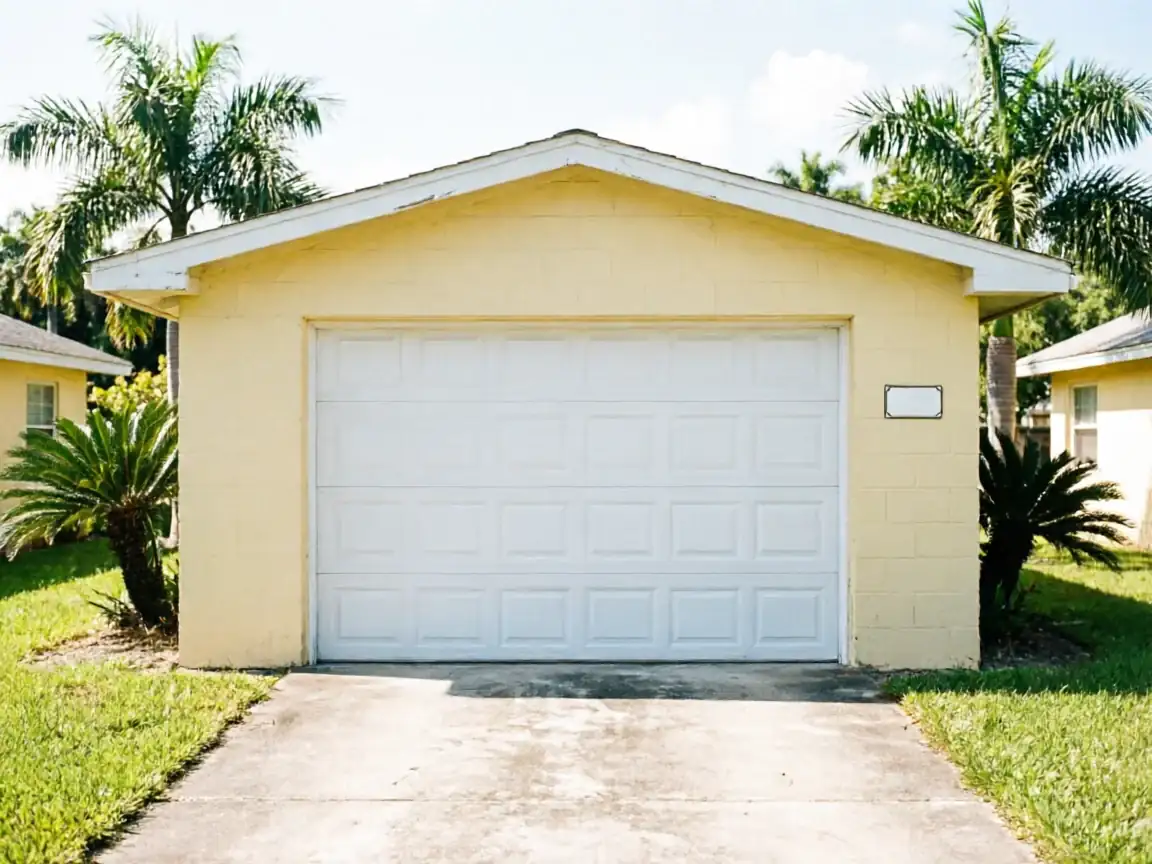
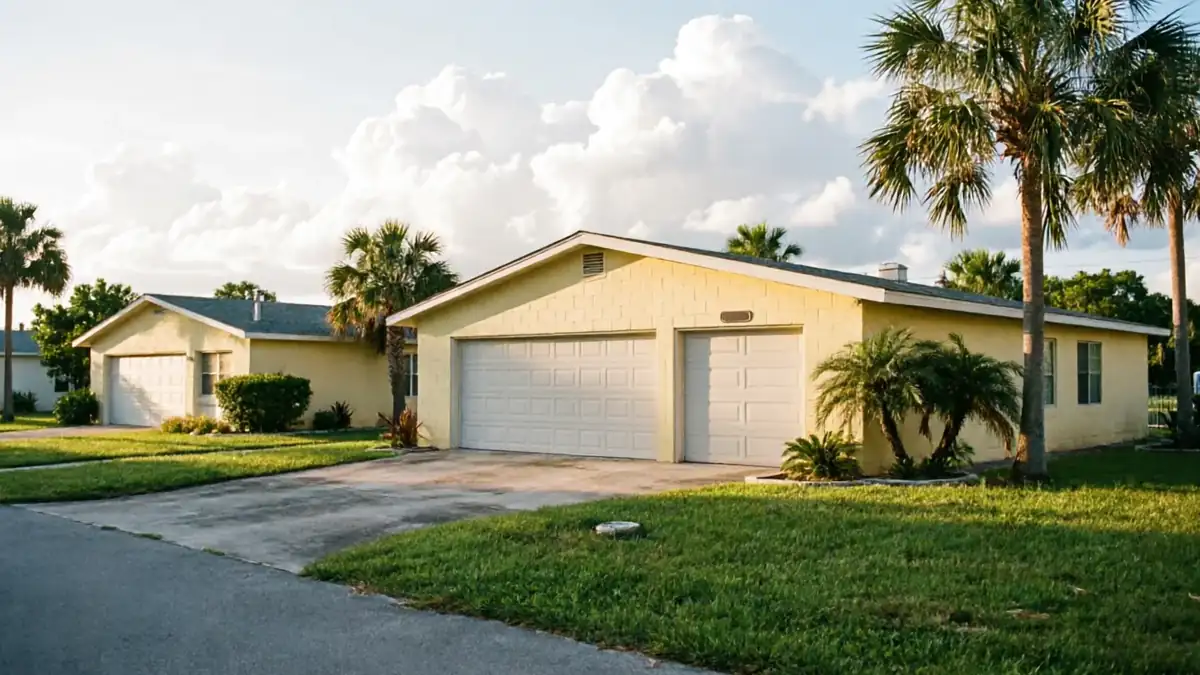
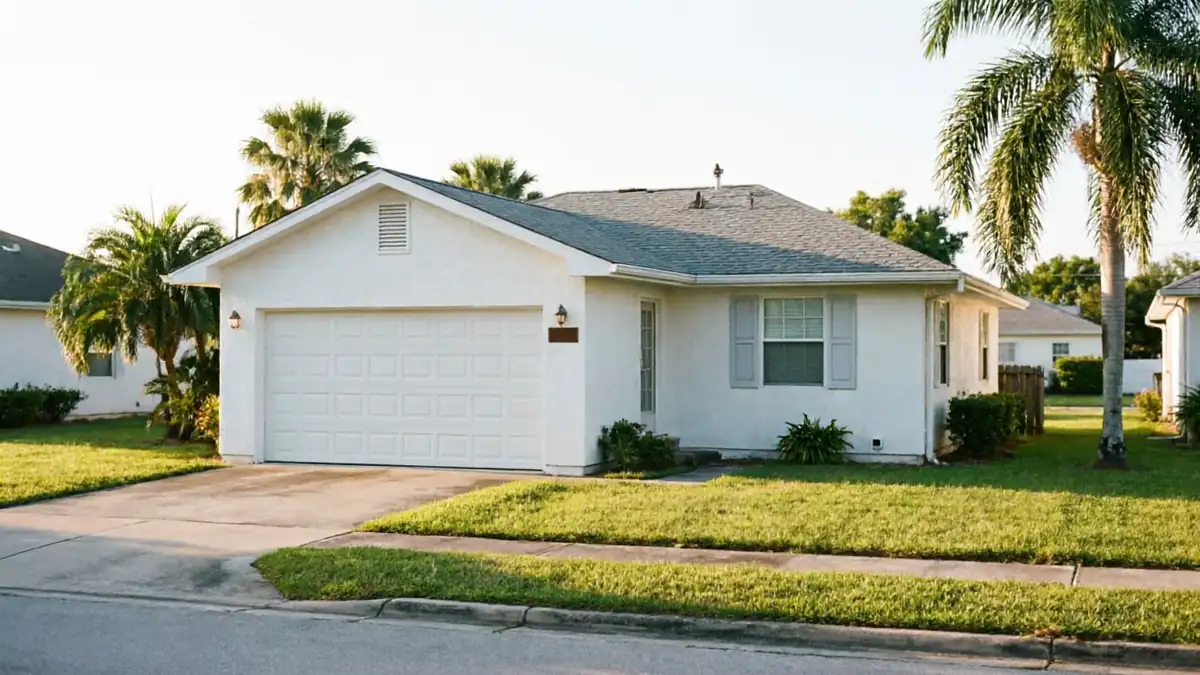
A large share of garage doors around Wesley Chapel are original or close to original to houses built between 1970 and 2005
With most of that stock dating to the 1980s and '90s across the two dozen communities in this service area. Steel track brackets from that era were set into wood framing with screws, not the lag-and-shield hardware used in newer construction, and thirty-plus years of door cycles work those screws loose. That's the single most common cause of an off-track door on a house of that vintage - not a storm, not a car bump, just fasteners that have backed out a little further every year.
The mild temperate climate here doesn't put the stress on the door that a hard freeze-thaw cycle would
But it brings steady humidity that swells wood jambs and framing seasonally. That slow swelling and shrinking flexes the track brackets against the frame year-round in a way that colder, drier climates don't see, which is part of why this failure shows up on doors that otherwise look fine.
Across the owner-occupied houses in this area
The age of the stock means a lot of garages are carrying the same original hardware, so this isn't a one-house problem - it's a pattern tied to when this corner of the county was built out.
What the Fix Involves
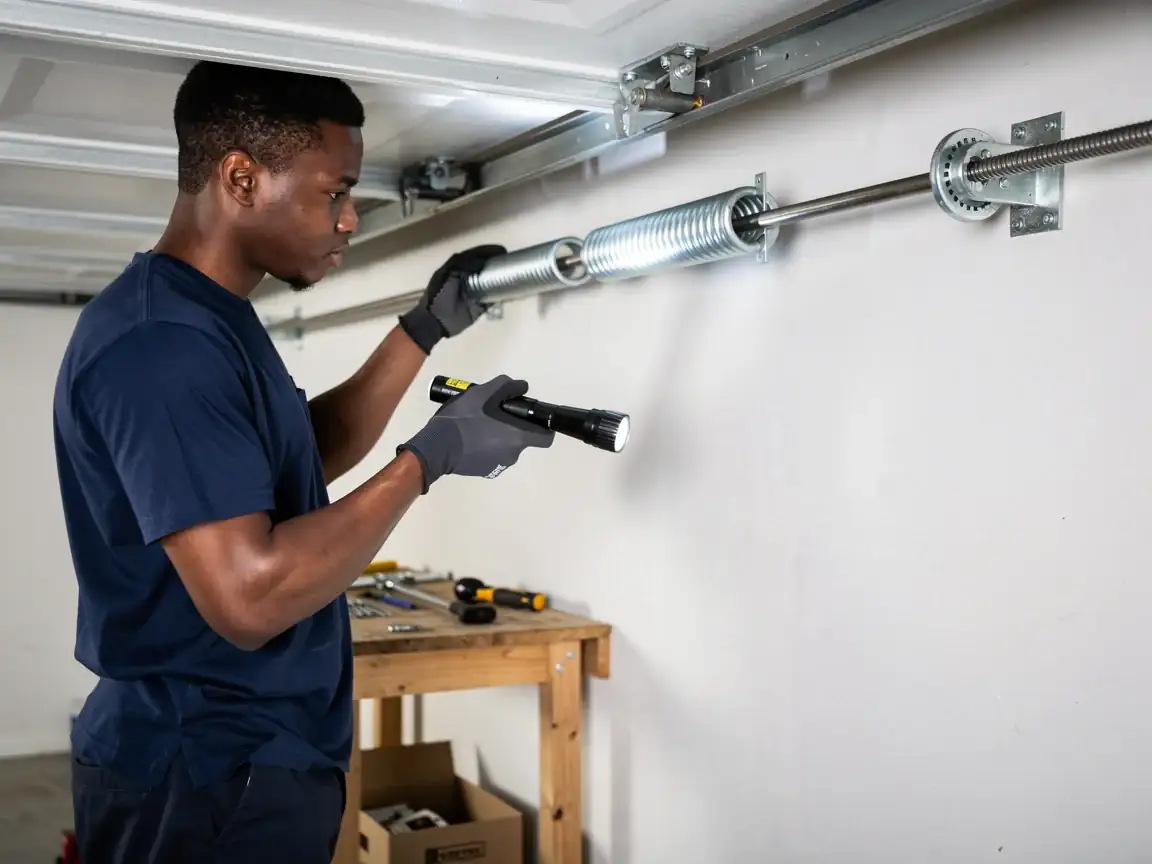
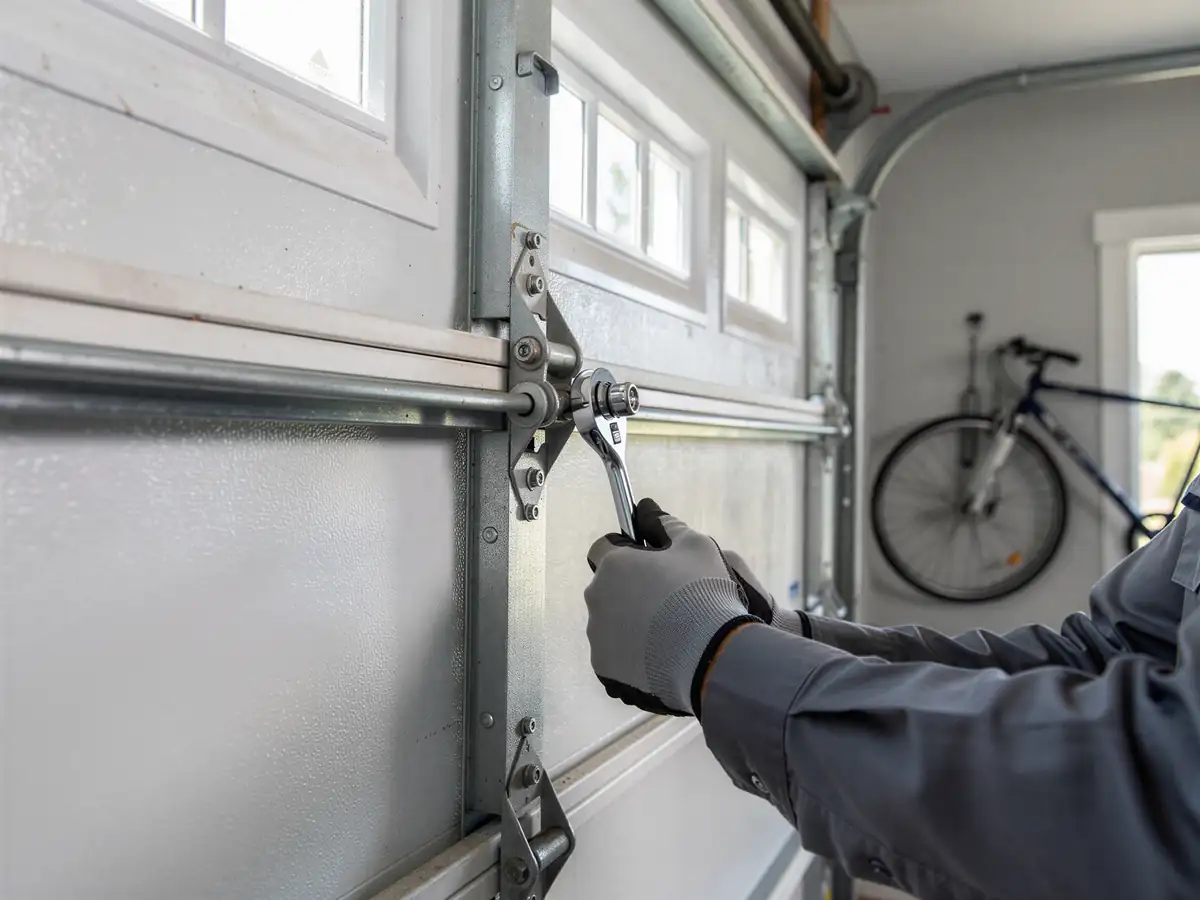
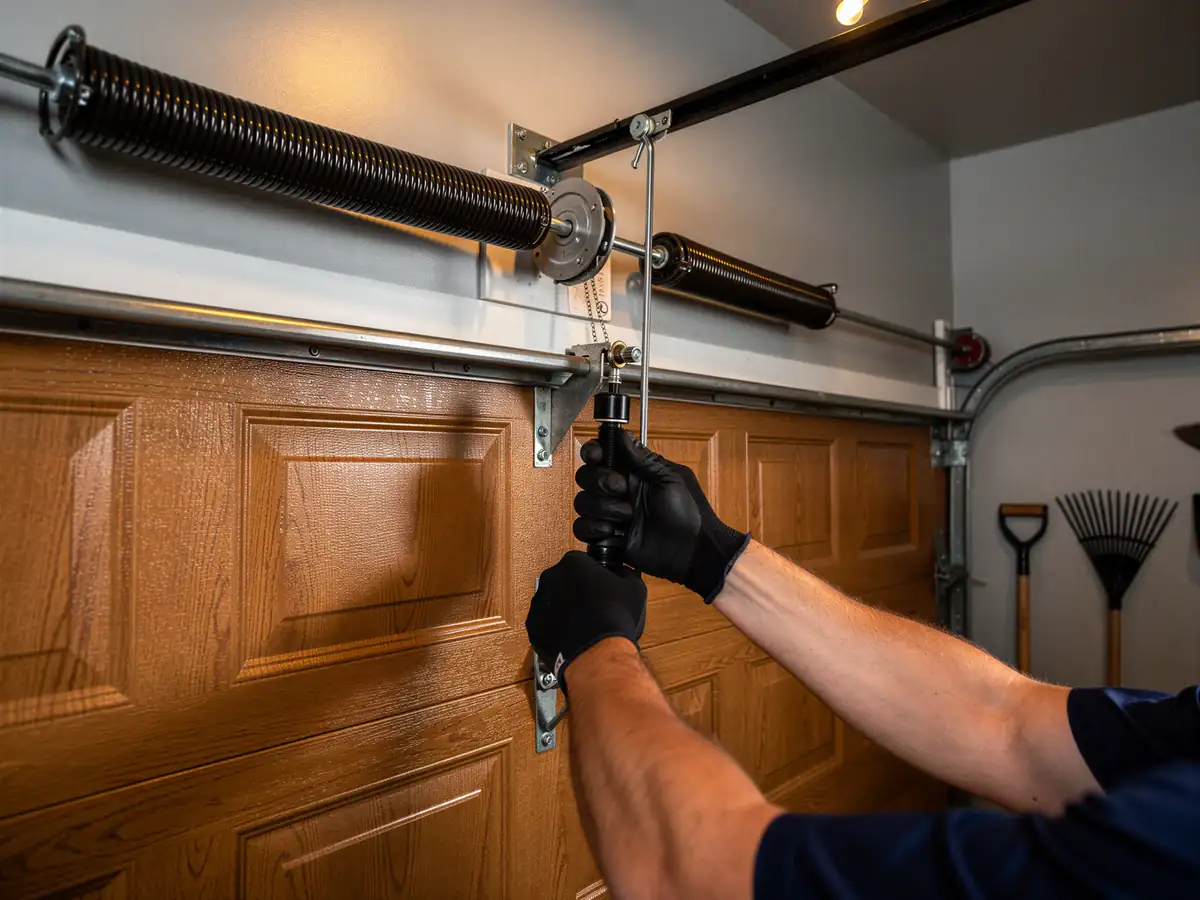
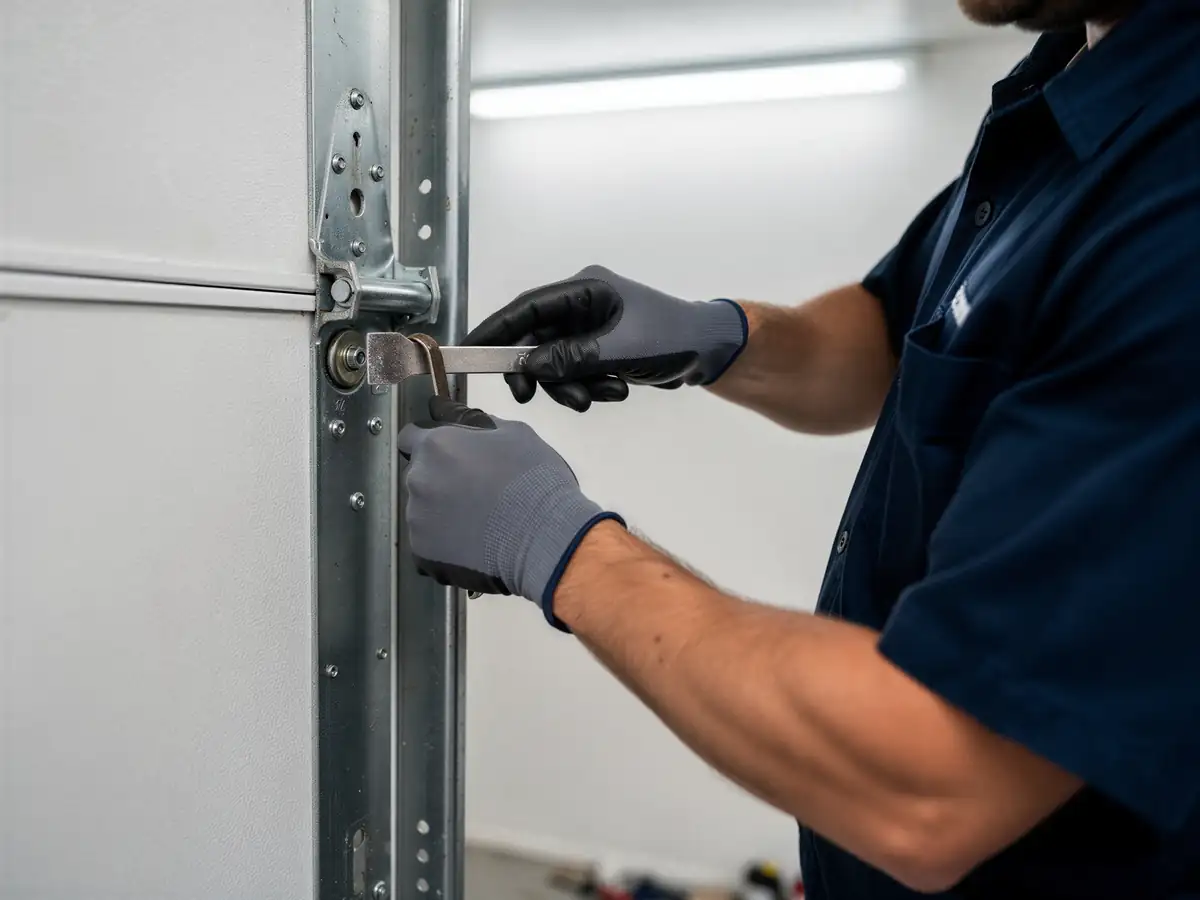
The first step is always relieving spring tension before anyone touches the track or the door panel - that's not optional, and it's the part that makes this a bad DIY candidate once the door is actually off the rail. From there, the fix depends on what's bent and what's just loose. A roller that popped out with a straight track usually means re-seating the roller, checking the bracket screws, and often re-anchoring the bracket with longer screws or shield anchors into solid framing instead of the original soft wood path.
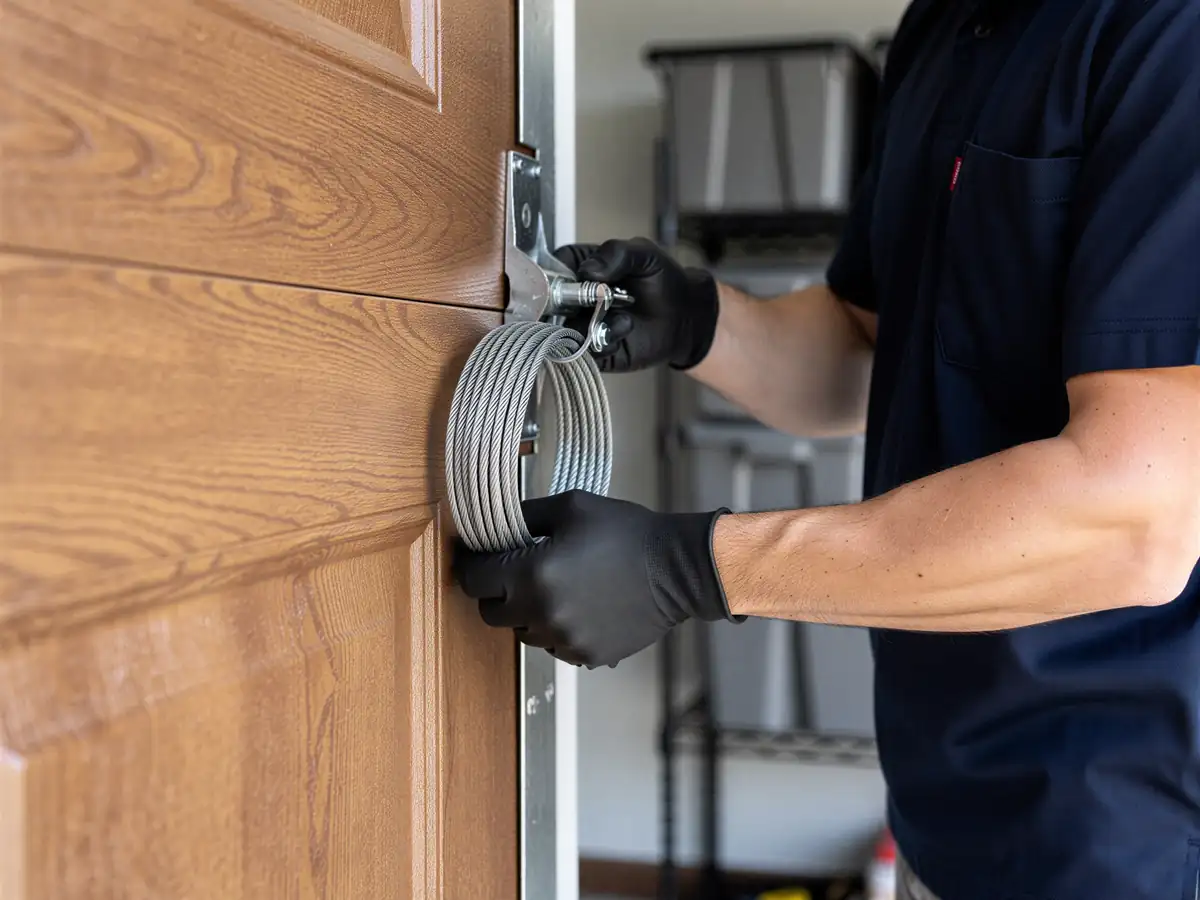
If the track itself has a kink, that section gets replaced rather than hammered straight - a track that's been bent once and straightened back will come off again at the same point, and we tell people that up front rather than charge for a fix that won't hold. Cables and rollers get inspected at the same time, since a door that came off track under tension often stressed the hardware around it even if it looks fine.
One honest limitation: if the door came off because a panel is already cracked or warped from being forced, realigning the track won't fix the panel, and we'll say so rather than reassemble a door that's going to bind again in a month.