What You Are Seeing
The door stops partway and reverses on its own. It drops the last foot instead of closing smooth. You hear a bang from the garage and now the door won't lift past waist height, or it lifts fine but sags to one side when it's open. Some owners call about an opener that runs but the door doesn't move at all - the trolley is clicking but nothing's catching.
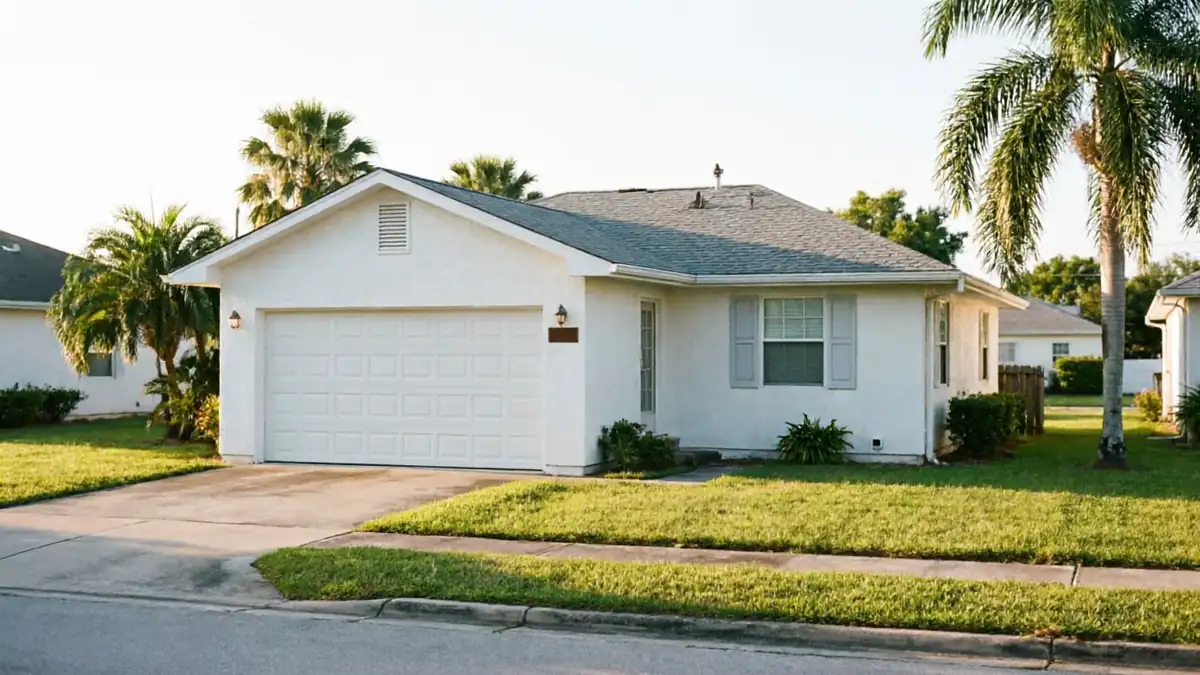
Most of these calls aren't random. Wesley Chapel's housing stock runs 1970 to 2005, with a lot of it clustered around the late 1980s and 1990s building boom that filled in neighborhoods across the area. A door installed when a house was built in 1988 has had over three decades of daily cycles on its original torsion spring, and springs are rated in cycles, not years. When they go, they usually go all at once, which is the bang you heard.
Opener trouble shows up differently. Circuit boards and logic units in units from the 1990s and early 2000s weren't built for the duty cycle some of these doors see now, especially on two-car garages used daily. If your opener hums but the door doesn't budge, that's often the gears inside the unit, not the door itself.
What Can Go Wrong
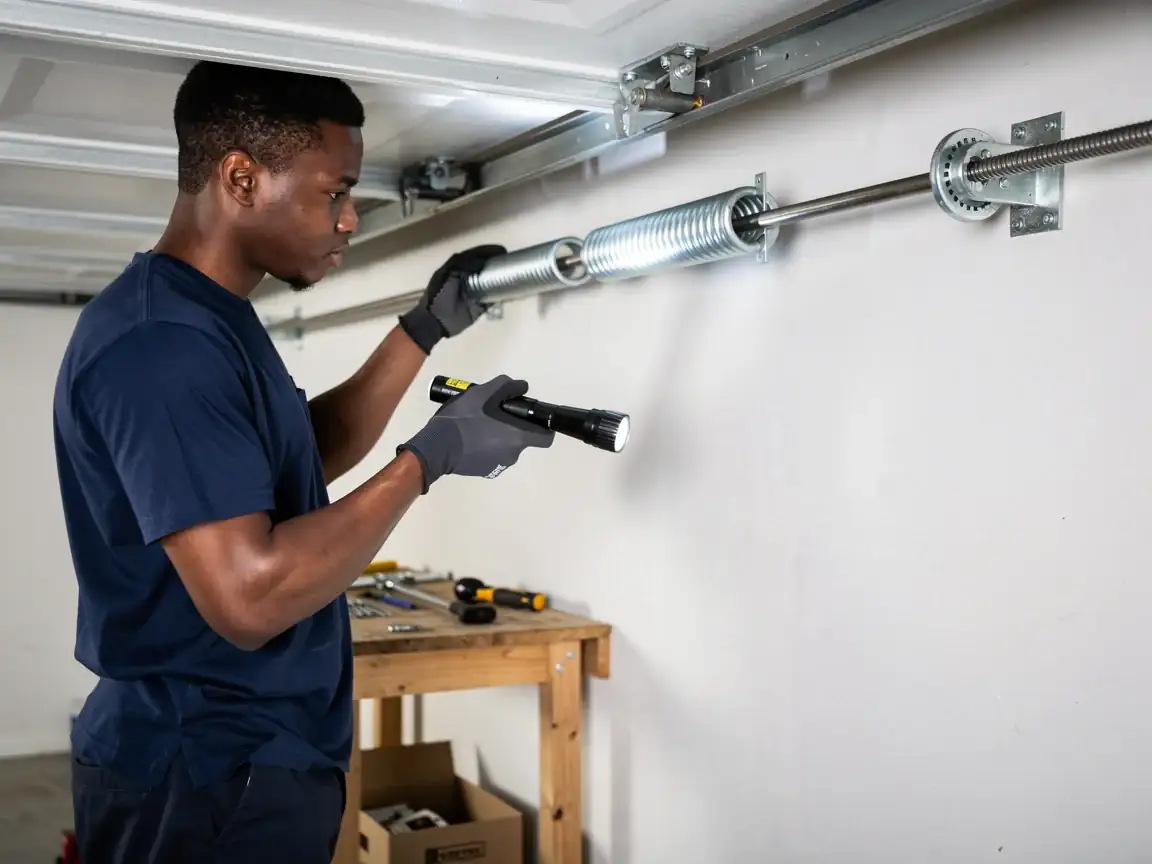
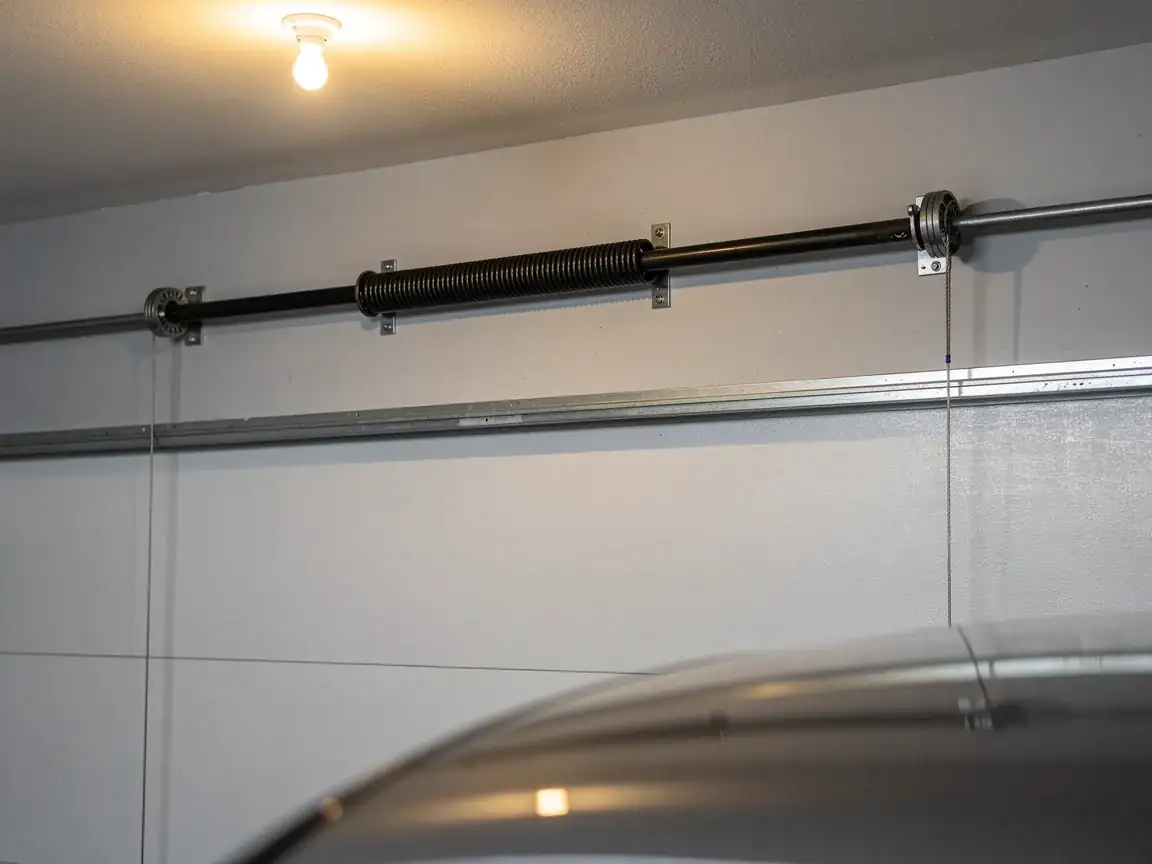
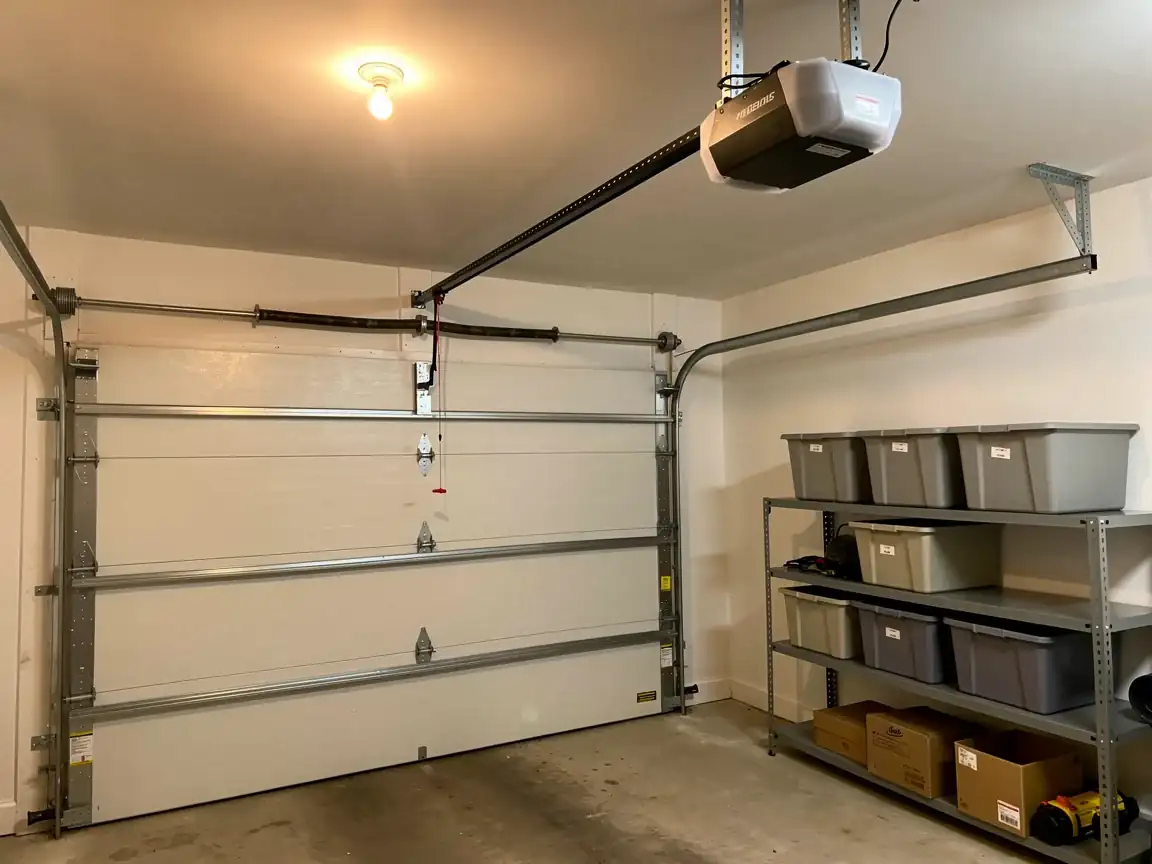
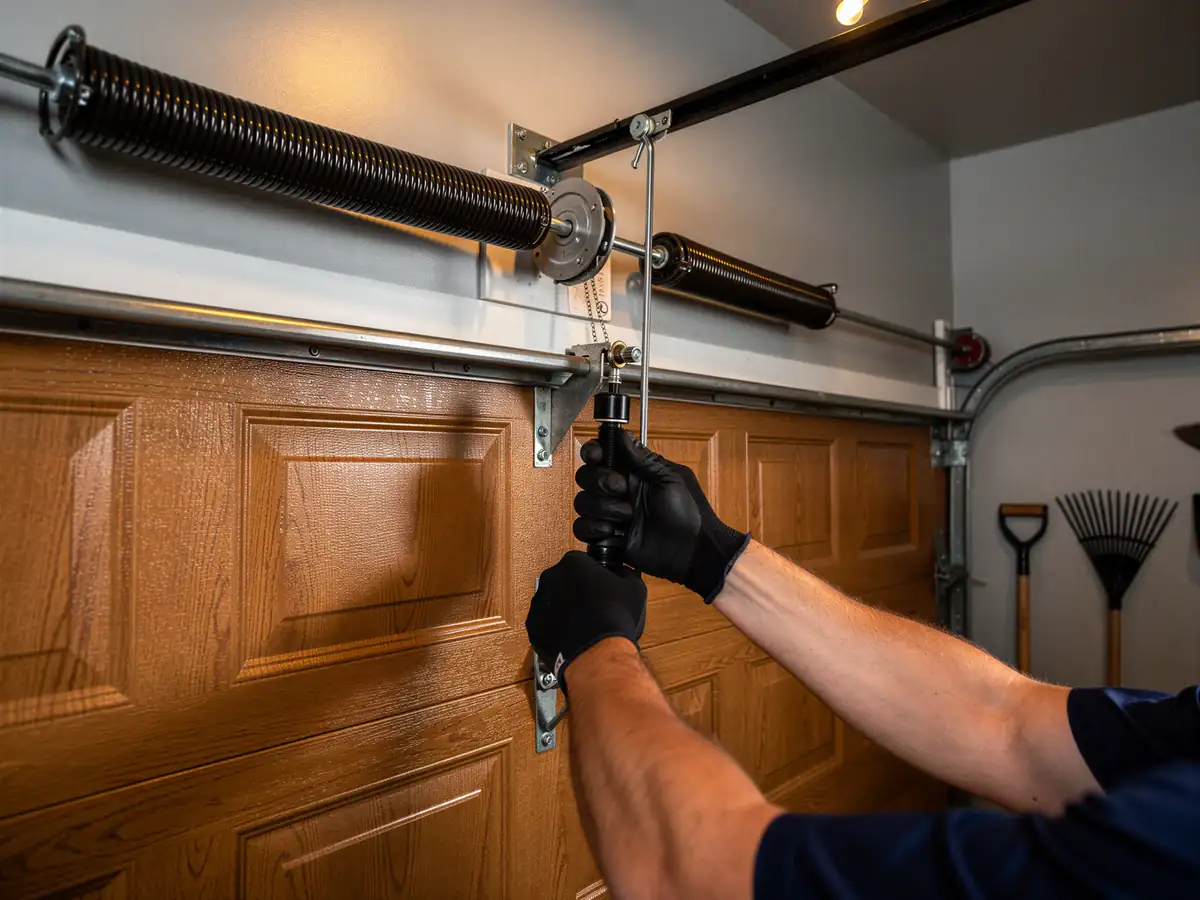
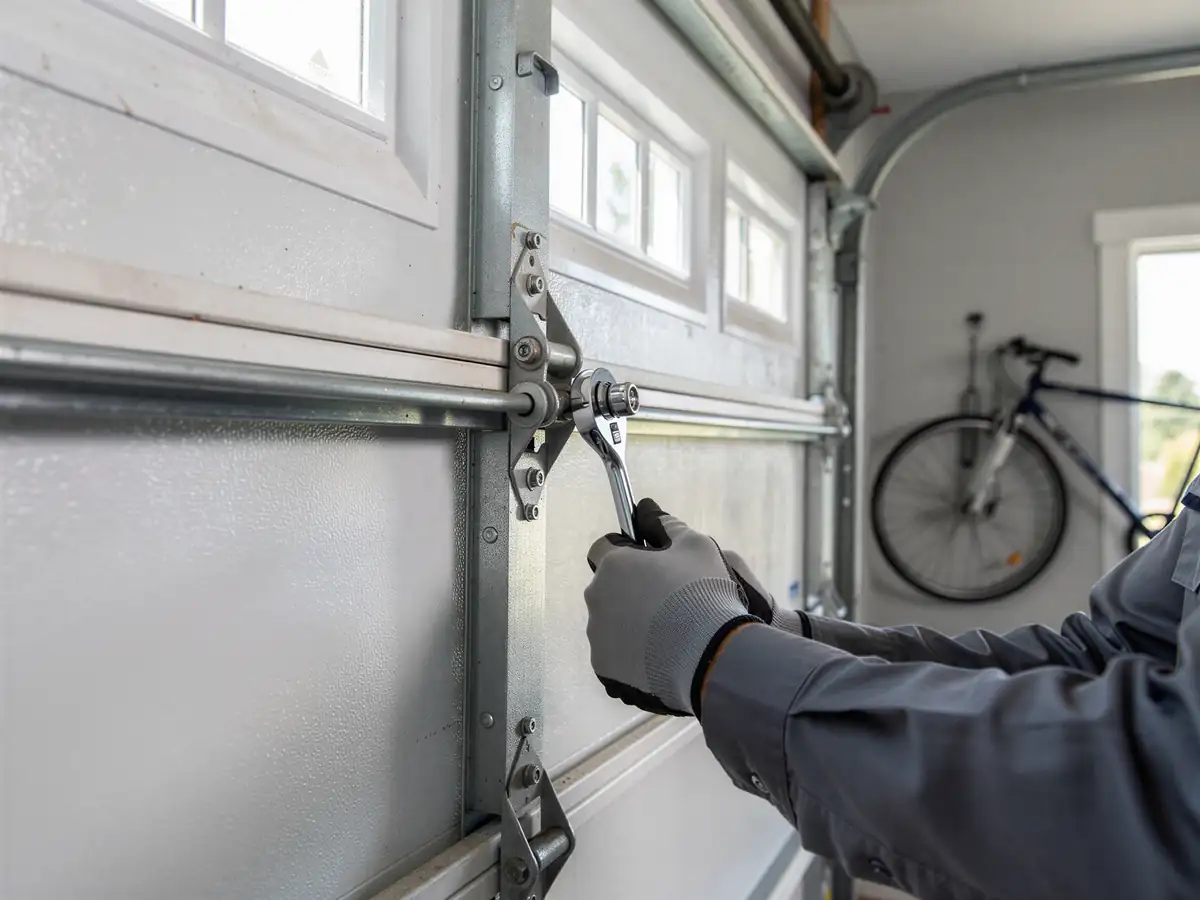
Torsion springs lose tension gradually, then snap. You'll hear it - a loud crack, sometimes mistaken for a gunshot by people who haven't dealt with one before. Once it goes, the door is dead weight and the opener will try to force it, which strains the opener motor and the top panel.
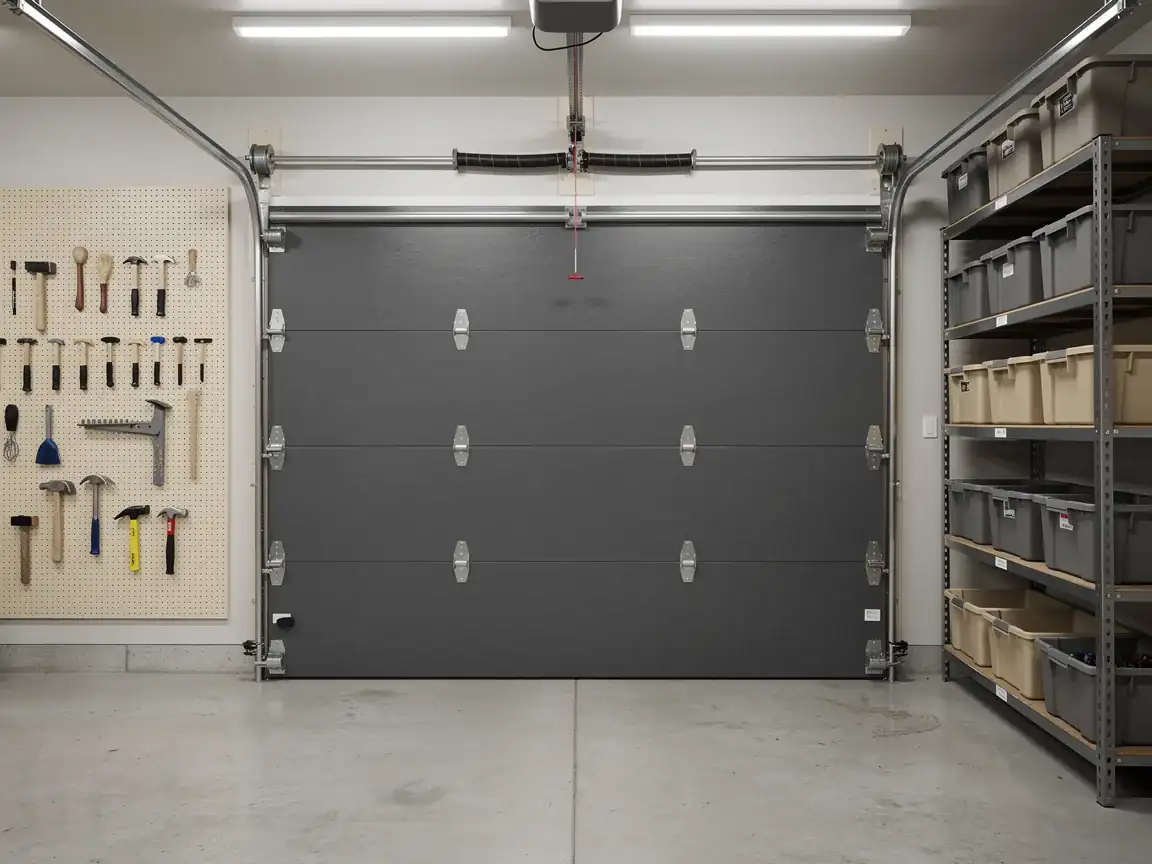
Extension springs, the kind running along the horizontal tracks on older two-door setups, stretch and fatigue without warning. No loud bang, just a door that gets heavier to lift by hand every month until it won't lift at all.
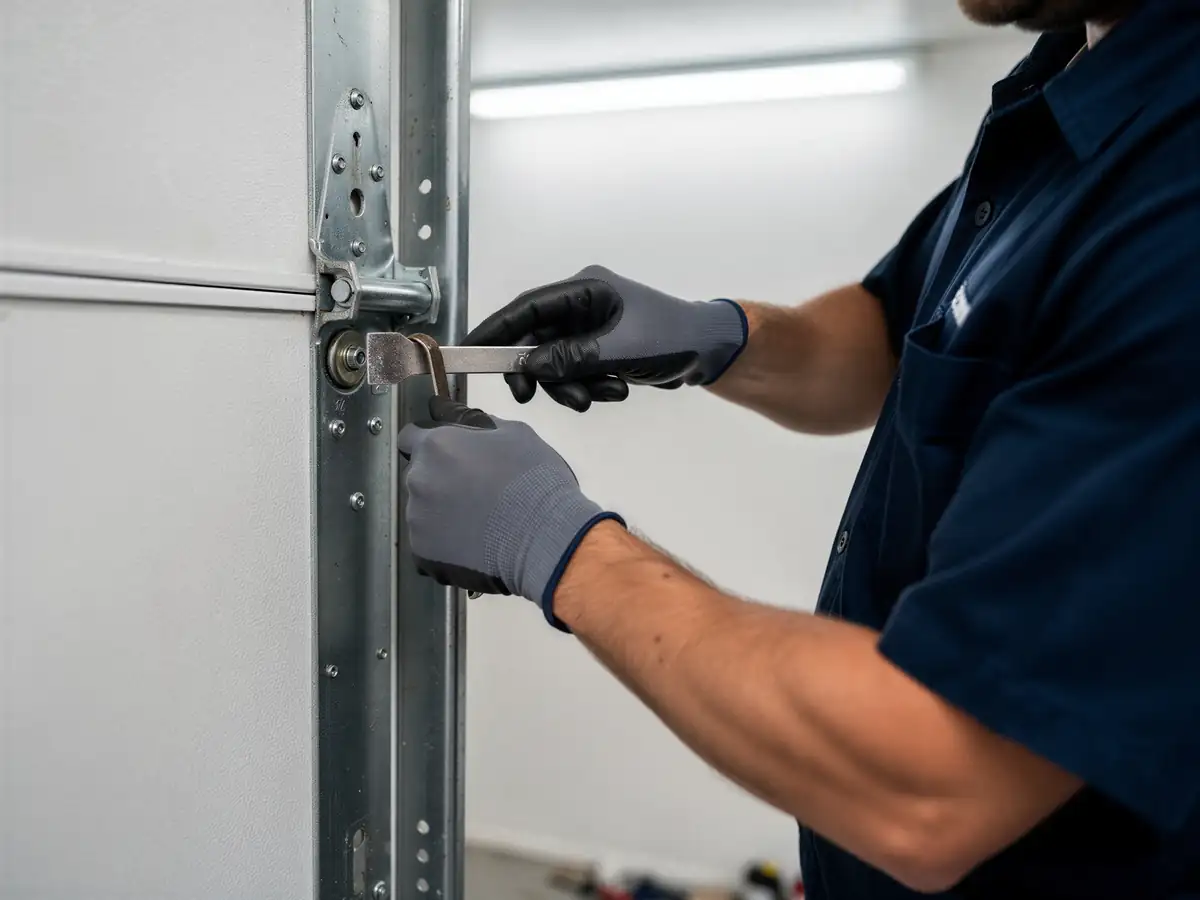
Rollers crack or seize, especially nylon rollers original to 1980s and 1990s installs. A seized roller binds in the track and throws the door off its rail, which looks like a bigger problem than it usually is.
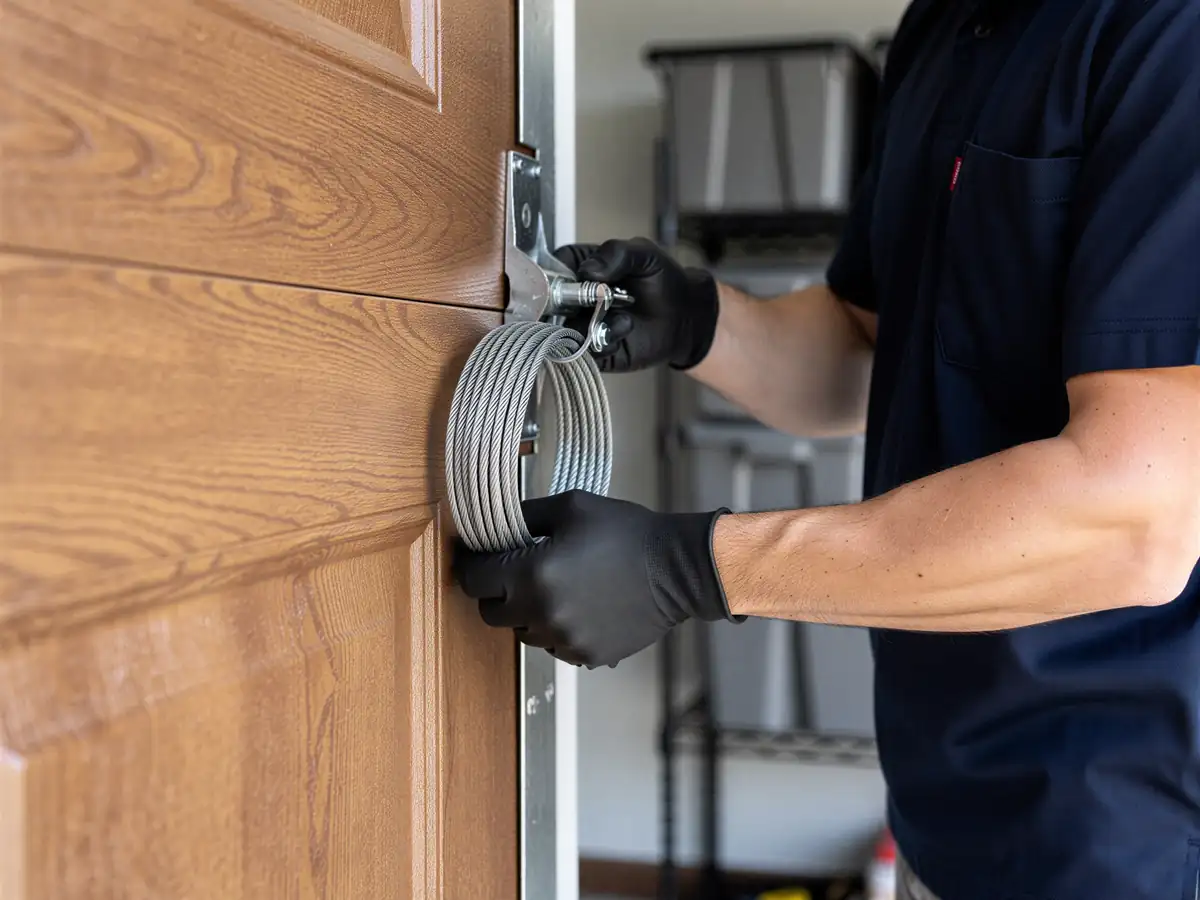
Cables fray where they wrap the drum, often alongside a spring that's already past its working life - the two tend to fail close together because they're under the same load.
Opener boards fail outright on units old enough to match the home's original build date. Sensors drift out of alignment too, which trips the safety reverse and makes a working door act broken.
Why This Fails Locally
The reason this shows up so often around Wesley Chapel comes down to two things
When the houses went up, and what the climate does to the hardware over that time.
With housing built mostly between 1970 and 2005, and a median build year of 1988
A huge share of doors in this area are running original springs, original rollers, or both. That's not a defect - it's just math. A torsion spring rated for a set number of cycles doesn't care what year it is, it cares how many times the door has opened and closed, and a 35-year-old door has put in a lot of work.
The mild temperate climate here means we don't get the freeze-thaw cracking that kills hardware up north
But humidity still does its own damage - slow corrosion on spring coils and track bolts, especially in garages that aren't climate controlled. That's a quieter failure mode than a cold snap snapping a brittle spring, but it ends the same way.
Across the service area's roughly 130,044 households and 51,757 owner-occupied houses
The pattern repeats in neighborhood after neighborhood built in that same window.
- 130,044 households
- 51,757 owner-occupied
What the Fix Involves
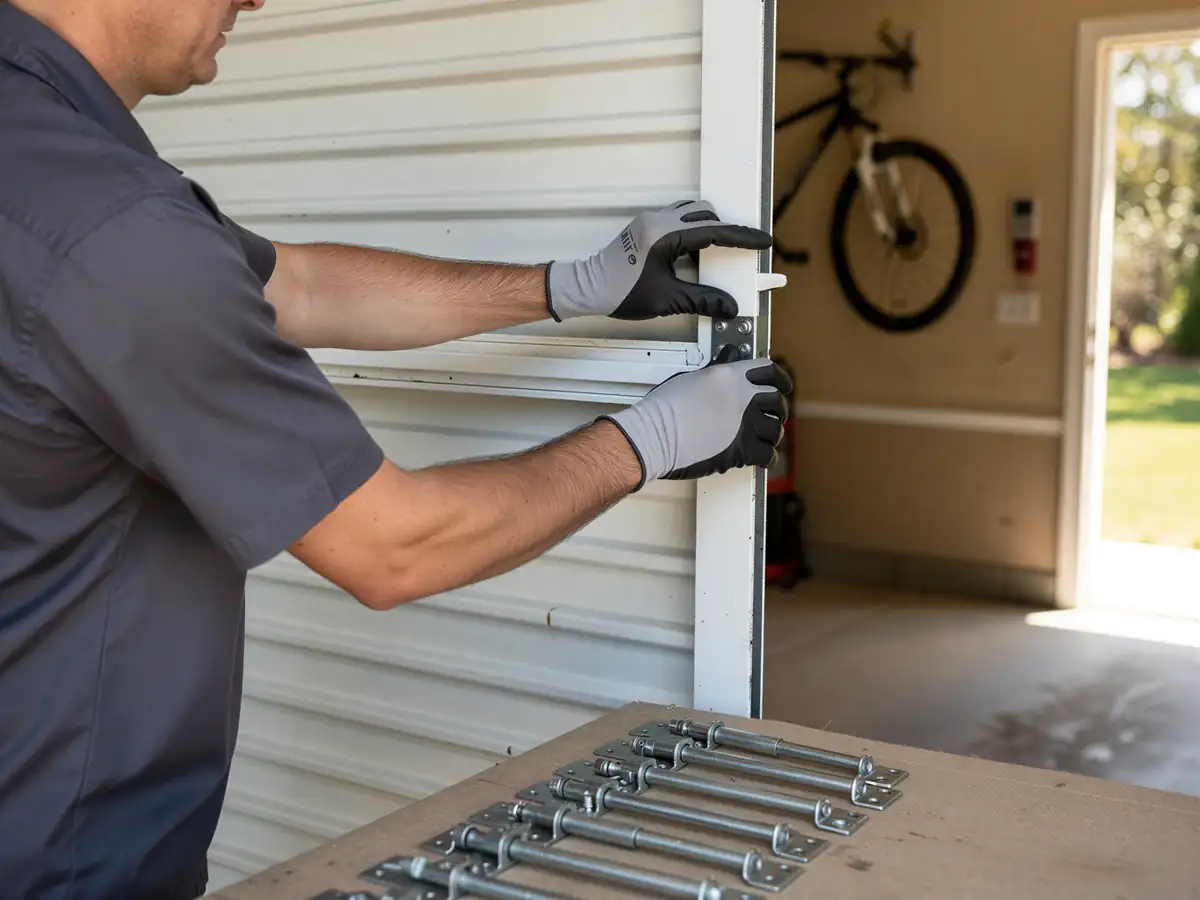
For a snapped torsion spring, the job is matching the spring to the door's weight and the drum size, not just grabbing a generic replacement off a shelf. We check both springs even if only one broke, since the other is usually close behind on cycle life.
Extension spring jobs get both springs and the safety cables that should already be running through them - a lot of older installs around here were done without that cable, which is a real safety gap we flag every time we see it.
Roller swaps are straightforward, but if the track is bent from a roller that jumped it, that gets straightened or replaced before new rollers go in, or they'll seize again in a year.
On opener boards, we test before we replace. If the board's dead and the unit is old enough to match the house's original build date, we'll say so plainly - at that point, a new opener usually costs less over time than chasing a failing board with a new sensor eye every few months. With median household income here around $63,145, most owners want the straight comparison between repair cost and replacement cost before they decide, not a sales pitch either direction.
One limitation worth saying up front: if a spring size is unusual for the door's age and we don't have it on the truck, it may mean a short wait on the part rather than a same-day fix.