What You Are Seeing
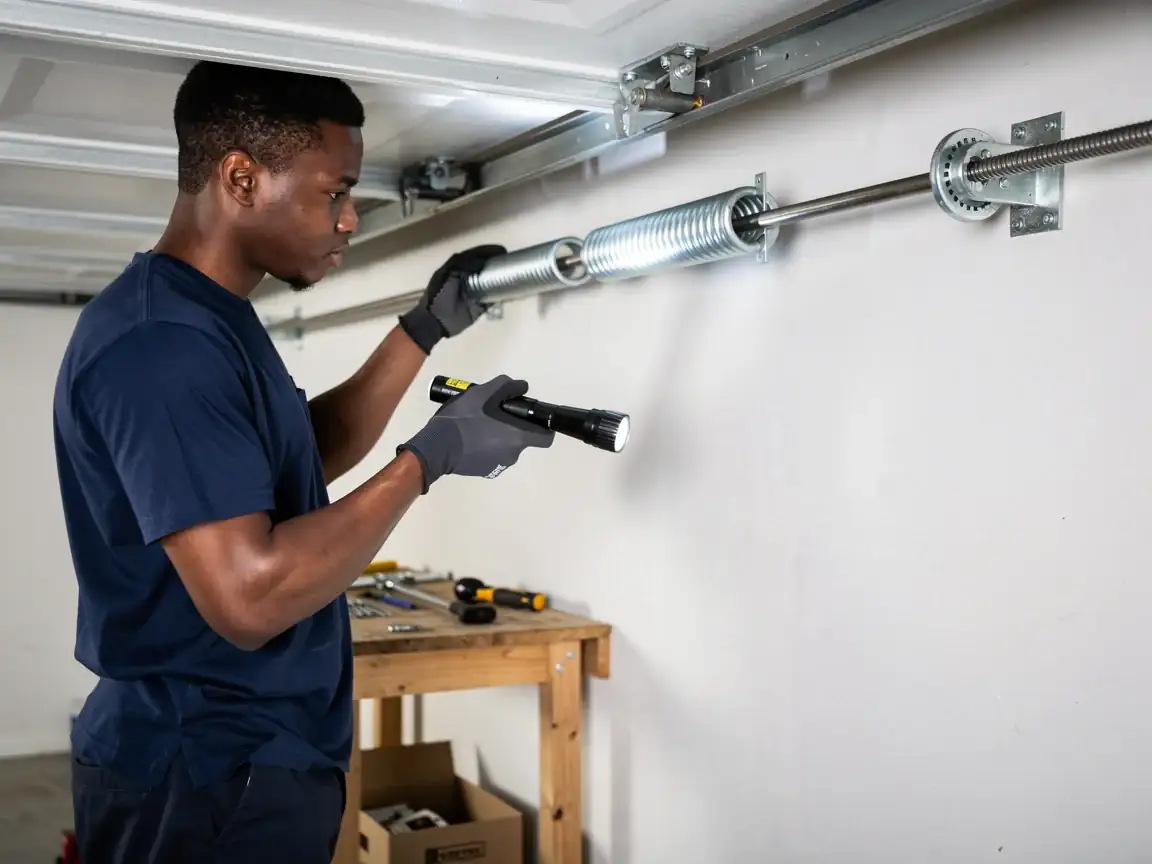
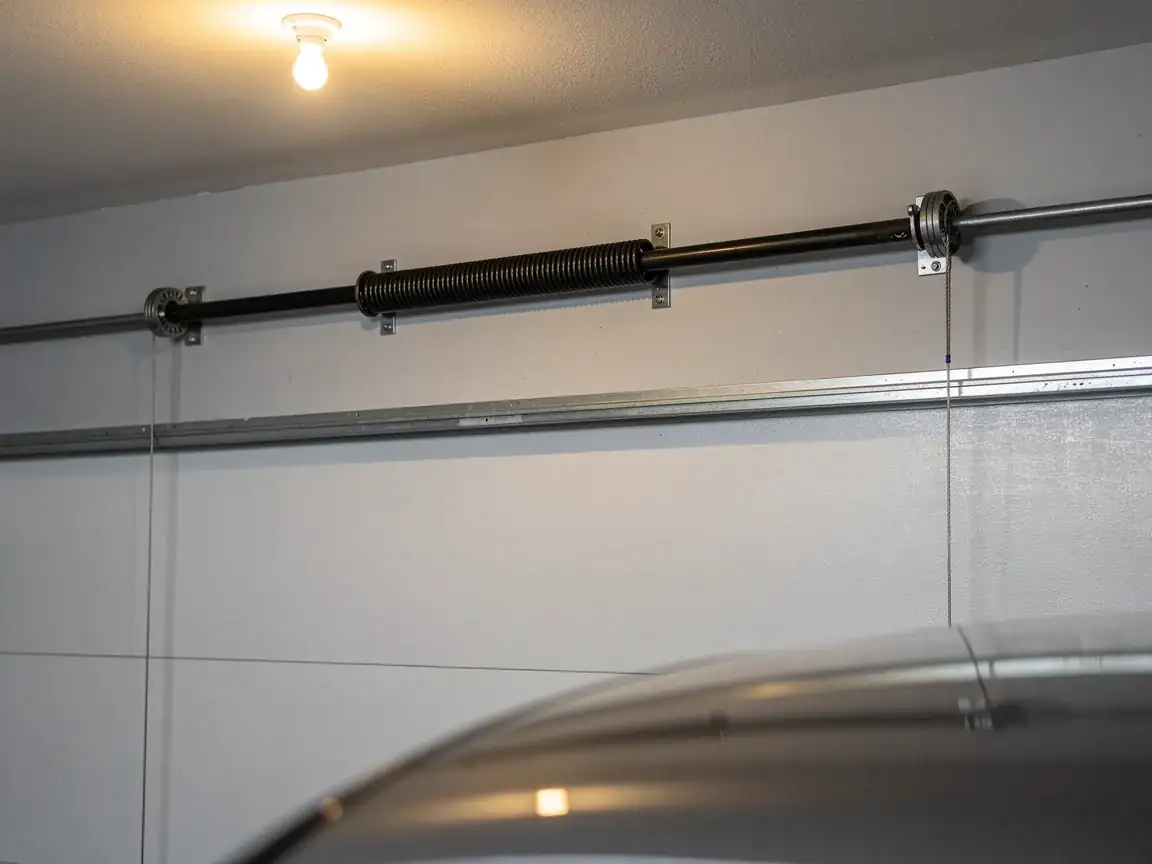
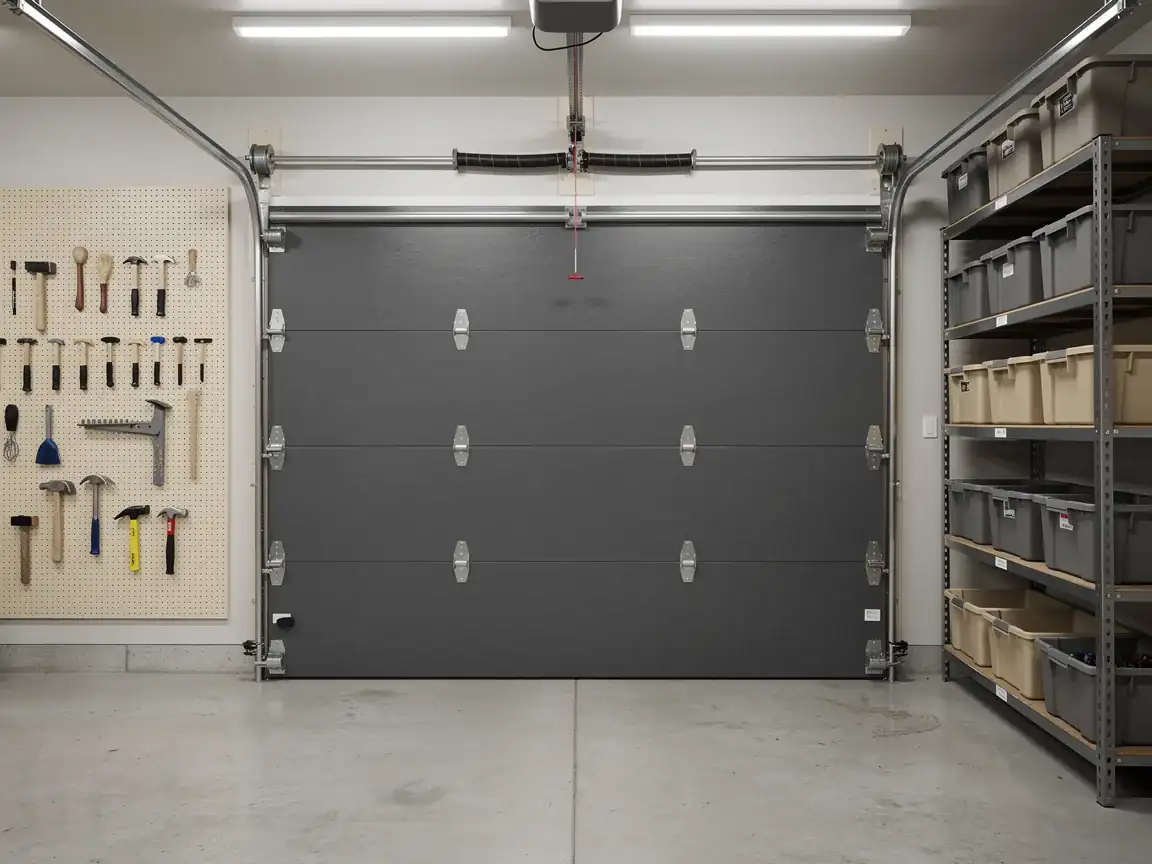
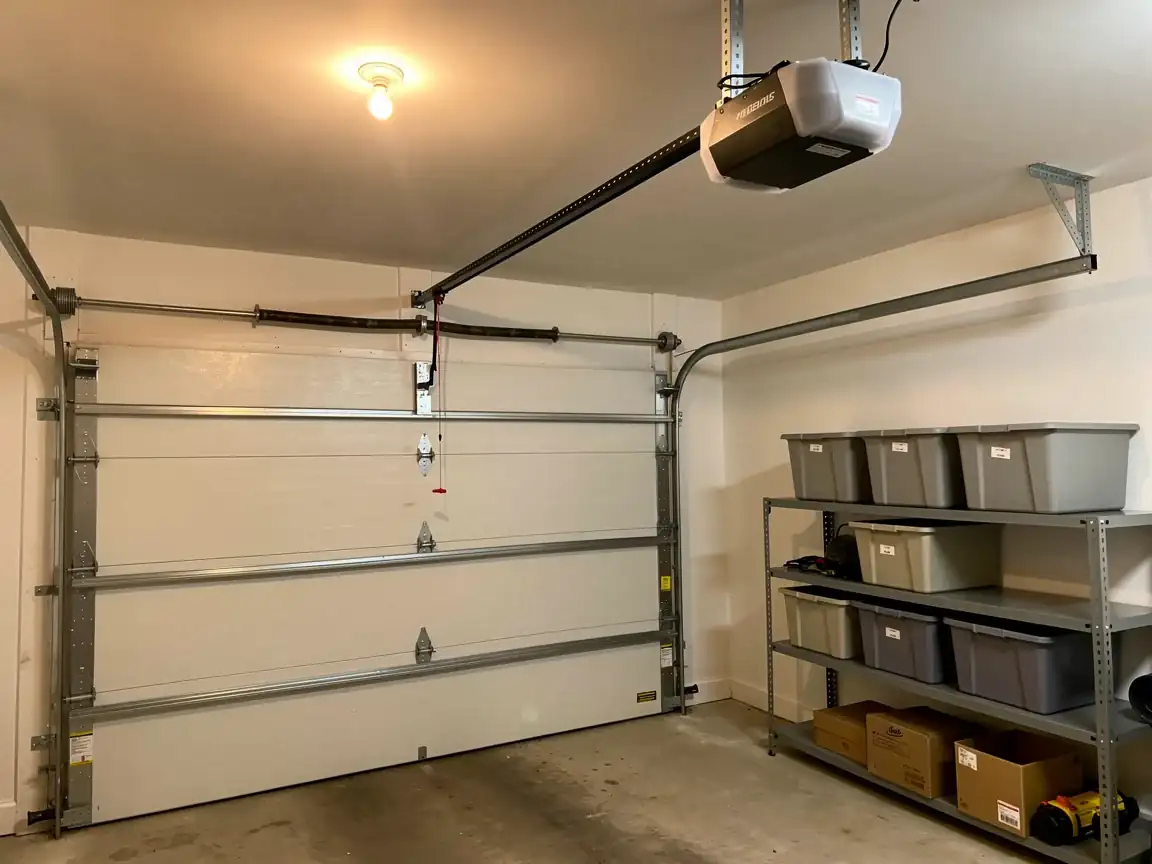
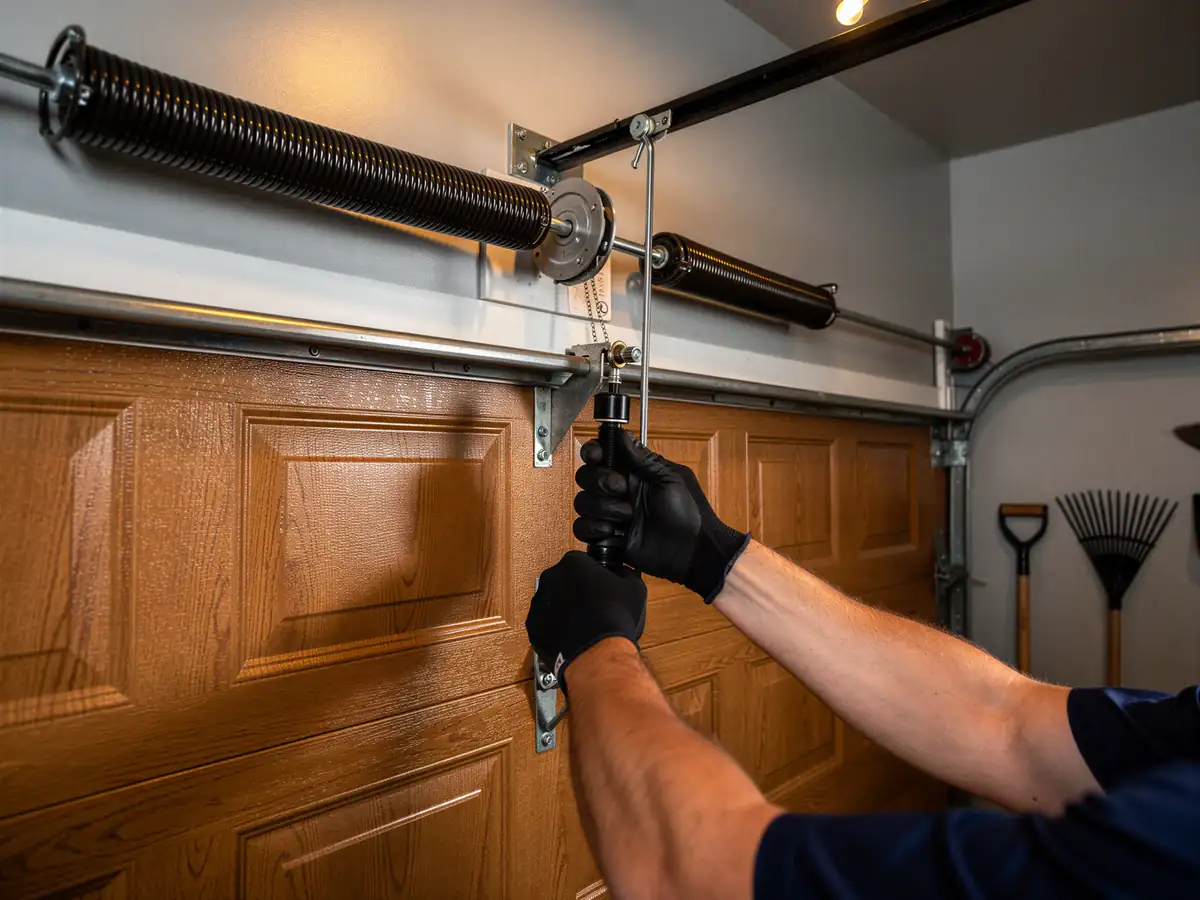
The door won't budge, or it only moves a few inches before the opener strains and gives up. Sometimes you'll hear a bang from the garage first - that's the spring letting go, usually a torsion spring mounted above the door on a shaft with cables running down to the bottom brackets. If you pull the release cord and try to lift the door by hand, it feels like it weighs three times what it should. That's not your imagination. A working spring counterbalances almost all of the door's weight; without it, you're lifting the whole panel yourself.
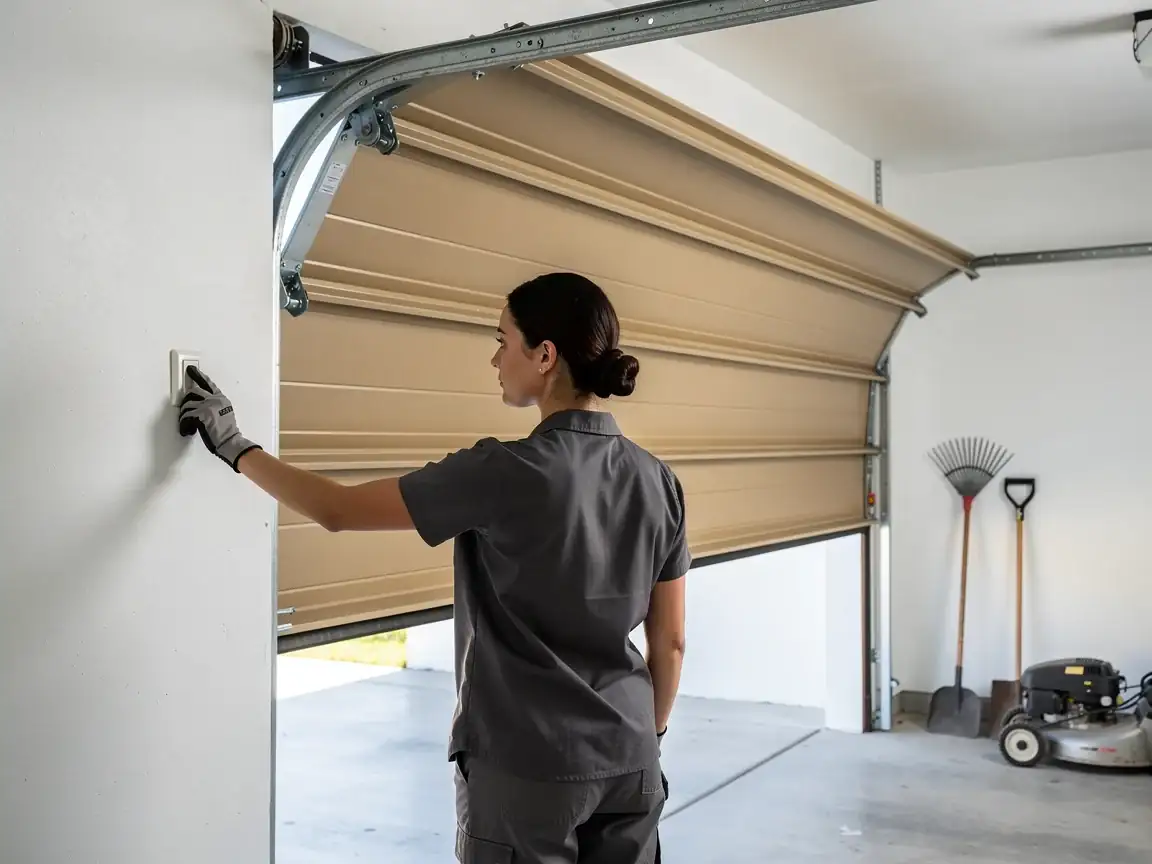
Sometimes the spring hasn't fully broken yet - you'll notice the door closing crooked, one side dropping faster than the other, or the opener's gears grinding on every cycle. That's a spring that's lost tension and is close to going. Across the houses we see in this service area, torsion springs on double doors are the most common failure, just because there's more door and more weight on one shaft. Single-door springs fail too, just less often and usually later.
Either way, this isn't a lubricate-and-wait problem. A spring under tension that's cracked or stretched past spec needs to come off the shaft, not get sprayed with WD-40 and left alone.
What Can Go Wrong
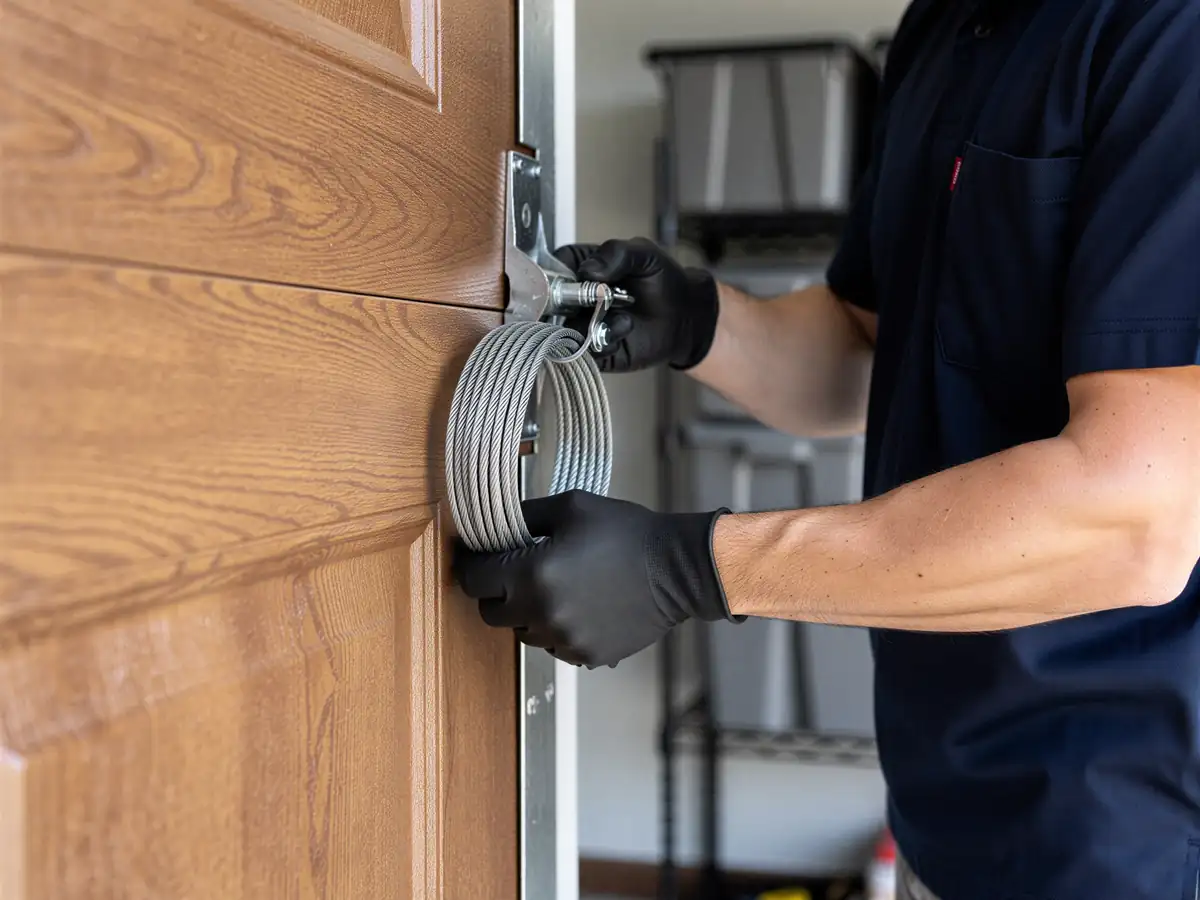
A spring at the end of its life doesn't always announce itself. It can look fine and still be one cycle from breaking, which matters because the moment of failure is when the stored tension lets go - and that's the dangerous part, not the repair itself. We've seen cables jump their drums once a spring goes slack, which can bend the bottom bracket or kink the cable itself, turning a spring job into a spring-plus-hardware job.
If the door gets forced open or closed on a failing spring - which happens when someone doesn't realize the spring is gone and keeps hitting the opener button - the opener's drive gear or trolley can strip trying to lift weight it was never built to carry alone. That's an extra repair that didn't need to happen.
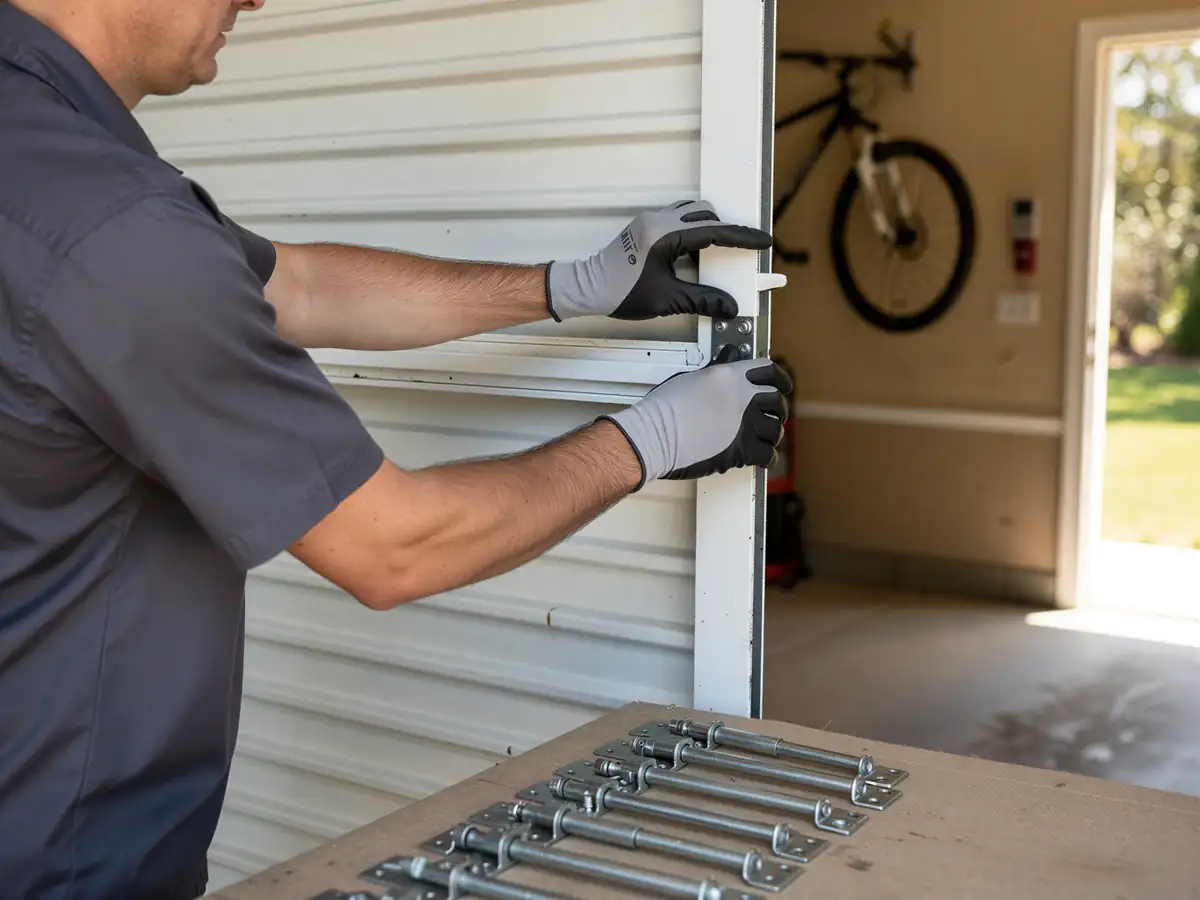
The other thing that goes wrong is mismatched springs. If only one spring on a double-torsion setup gets replaced and the other is left at a different wind count or wire gauge, the door will rack side to side under load, which wears out rollers and tracks faster than normal. Springs on a shared shaft get replaced as a pair for a reason, not as an upsell.
Why This Fails Locally
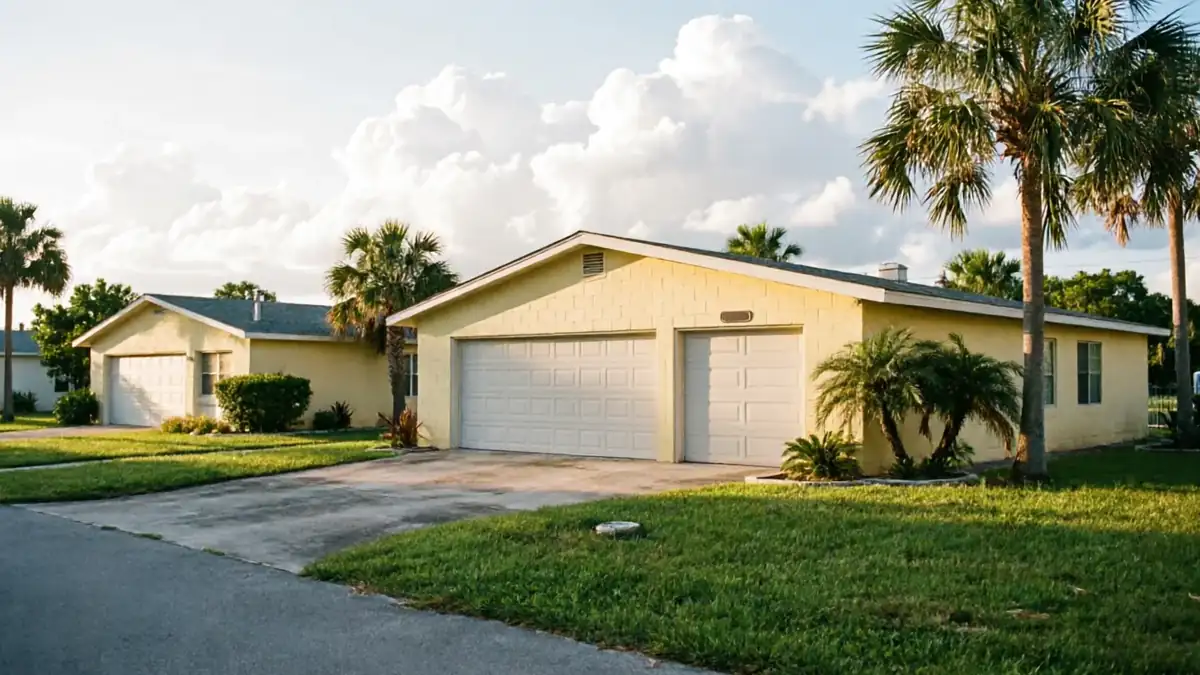
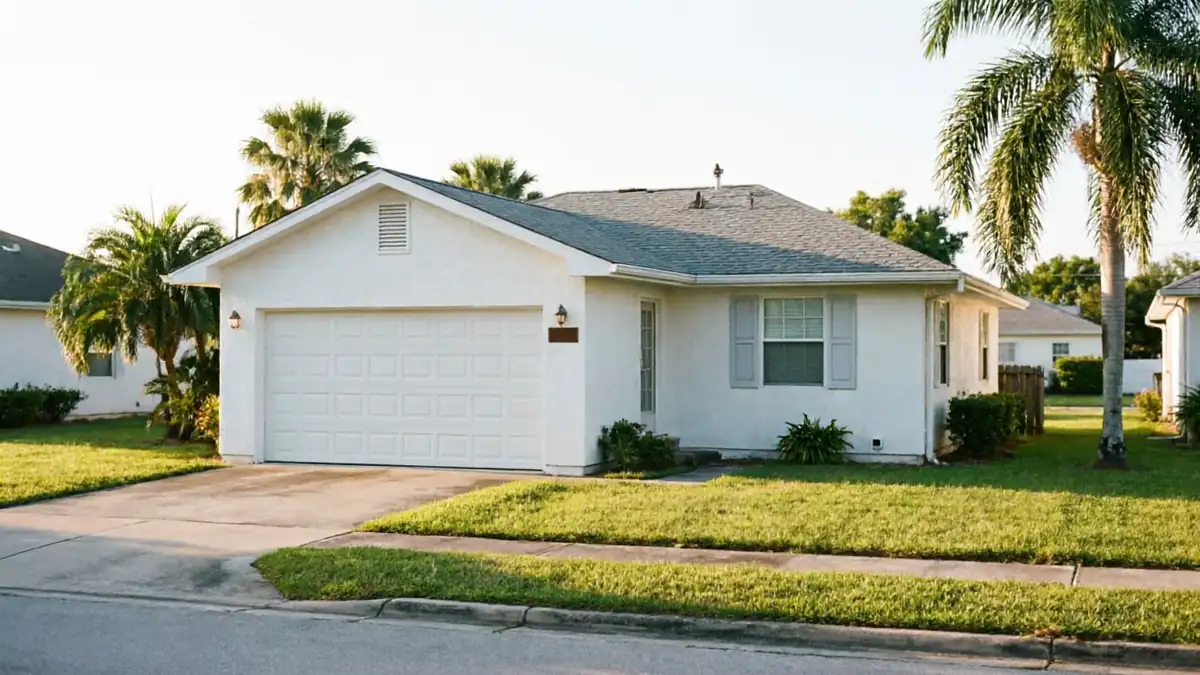
The median house across this service area's housing stock was built around 1988
With most of the 24 named communities we work in dating from the 1970s through the mid-2000s. Torsion springs are rated in cycles - roughly 10,000 open-close cycles for a standard builder-grade spring - and a house pushing 35 or more years old has usually been through at least one spring already, sometimes two, whether the owner knows it or not. If nobody's touched the spring since the house was built, it's well past due.
What's different here compared to colder parts of the country is the climate
This is a mild temperate zone - we don't get the hard freeze-thaw cycling that makes steel brittle and snaps springs early up north. So when a spring fails in a Wesley Chapel-area garage, it's almost always straight cycle fatigue from age and use, not weather shock. That actually makes the failure more predictable: it's a matter of mileage, not a cold snap catching anyone off guard. With over 51,000 owner-occupied houses in the service area built largely in that same 1980s-to-2000s window, a lot of garages are hitting that same wear point around the same time.
- 51,000 owner-occupied
What the Fix Involves
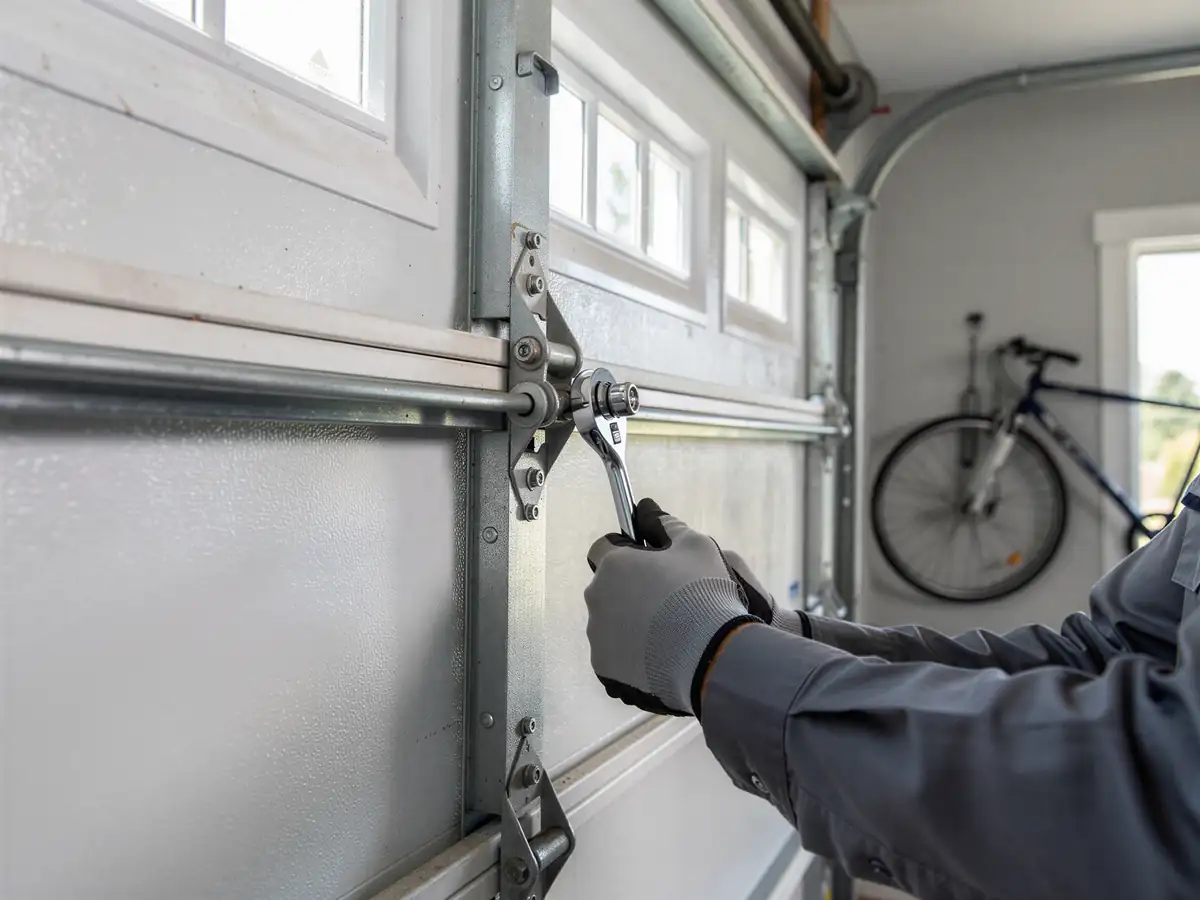
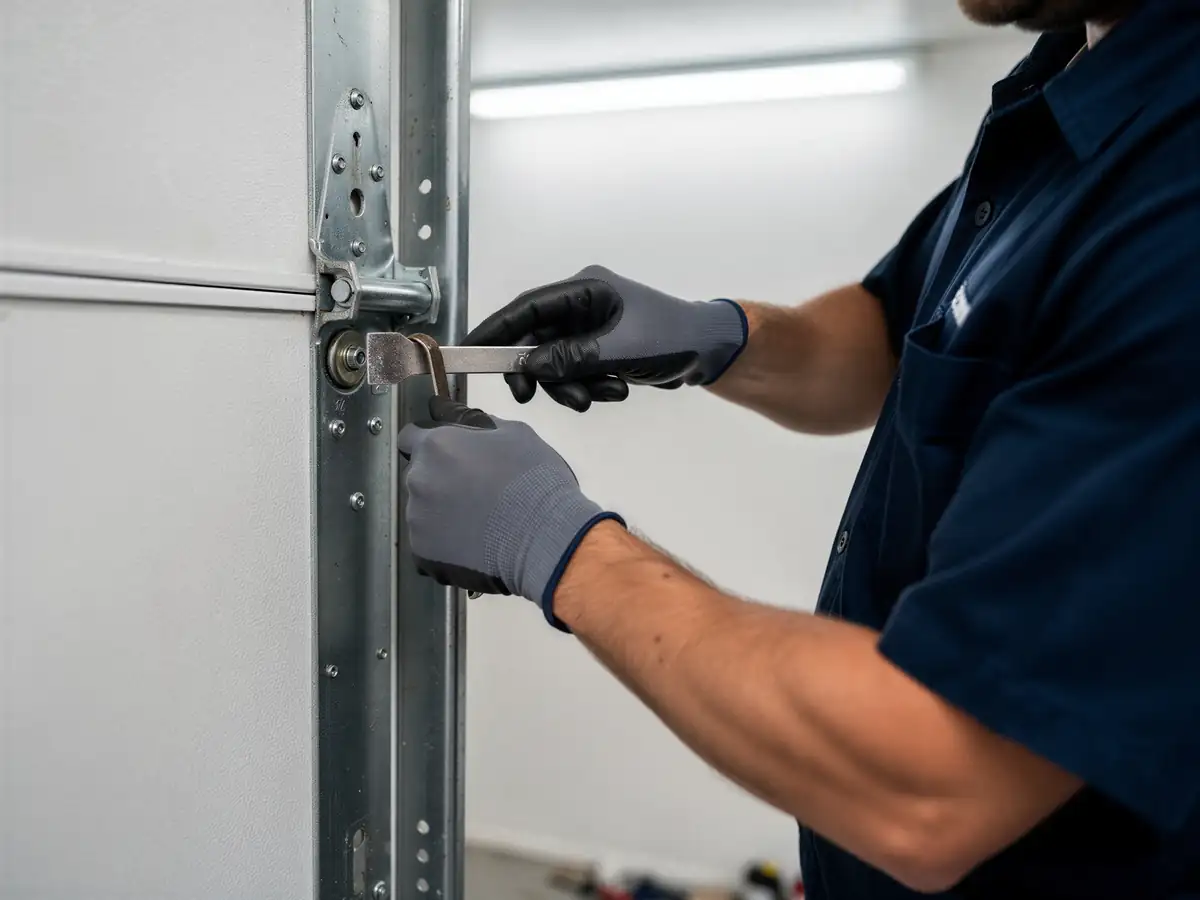
We measure the shaft, the wire diameter, and the wind direction of what's currently on the door - or what's left of it - before anything gets ordered, because a spring that's close but not matched to the door's weight either wears out fast or never balances the door right. For a double door, both springs on the shaft get replaced together, even if only one broke, so the door lifts evenly on both sides.
Part of the job is checking what the spring was hiding: cable condition, the bottom brackets, the drums, and whether the opener's gear took damage trying to lift a dead-weight door. We'll point out anything else that's worn, but we don't replace parts that don't need it just because the panel's open.
One honest limit here: if the door itself is older and the track or hinges are already bent or rusted past adjustment, a spring swap alone won't make the door run quiet or straight - at that point we'll tell you plainly whether it's worth sinking more into the door or whether replacement is the better money. We'd rather say that upfront than have you pay for a spring twice.