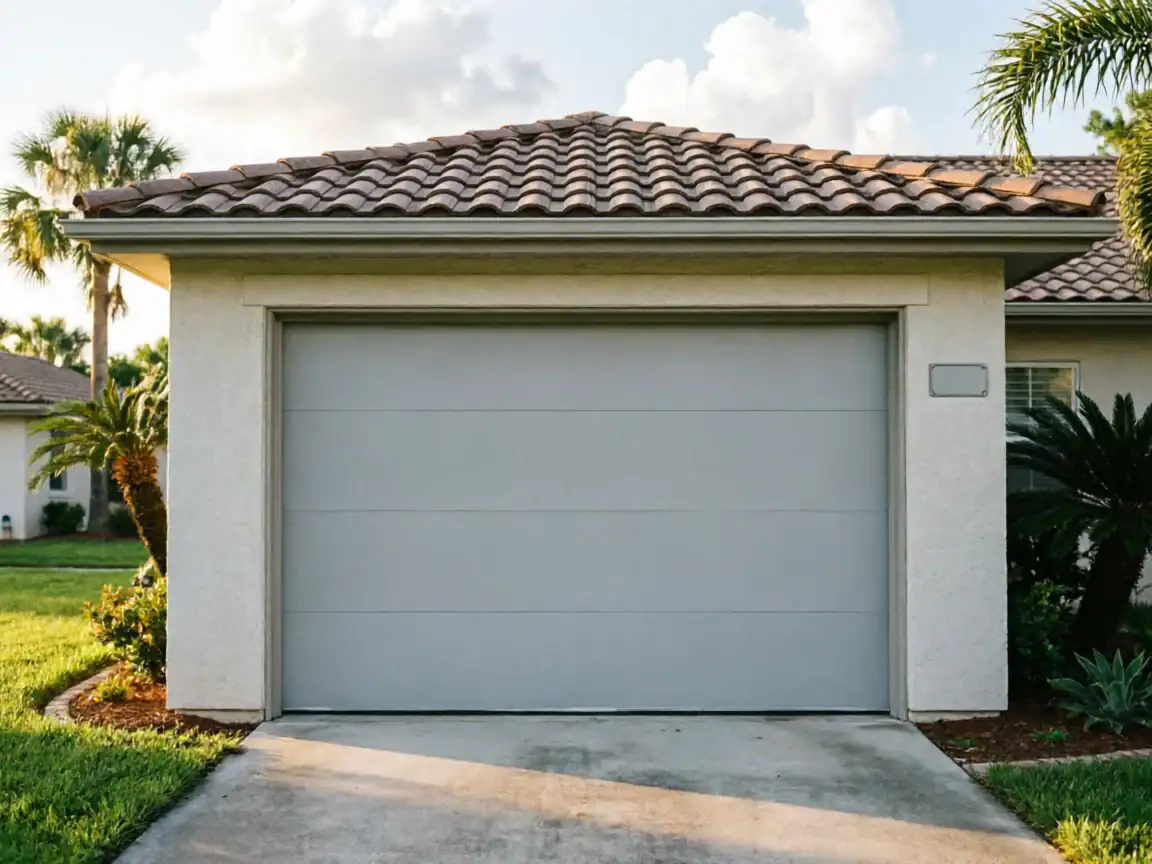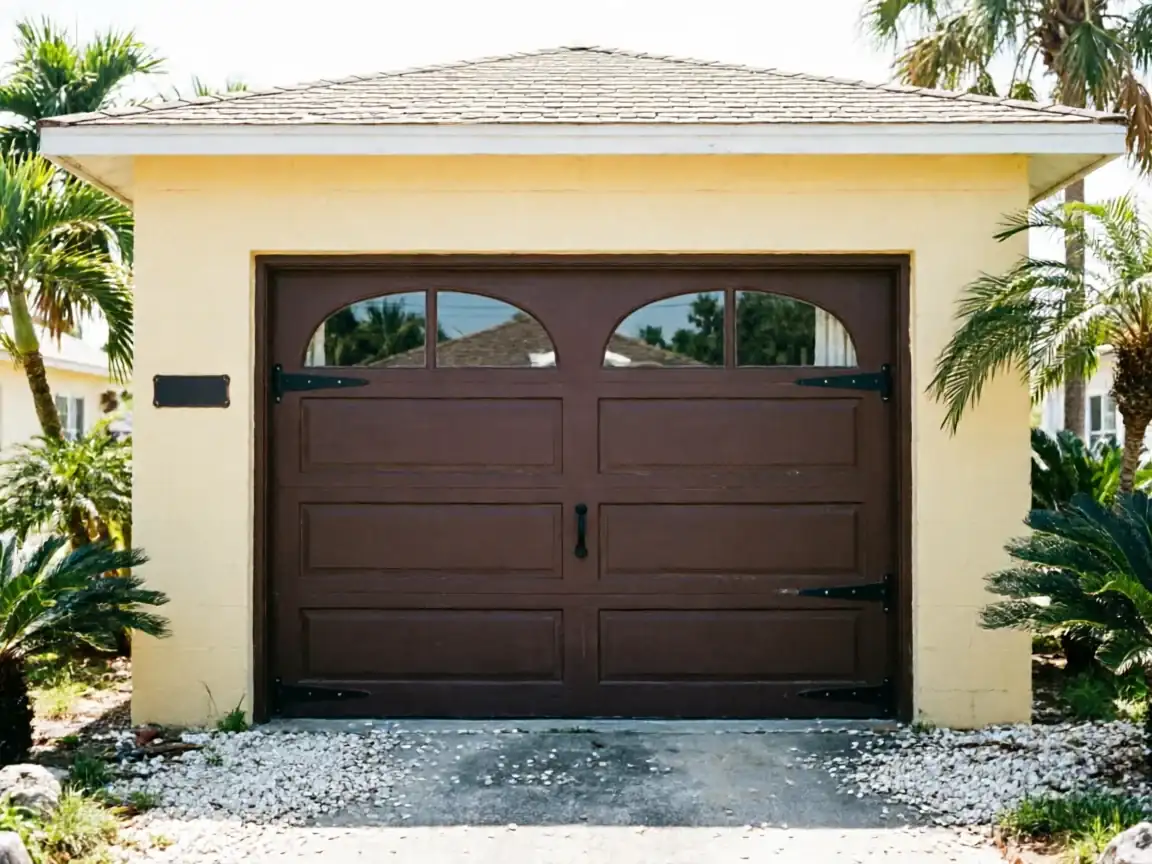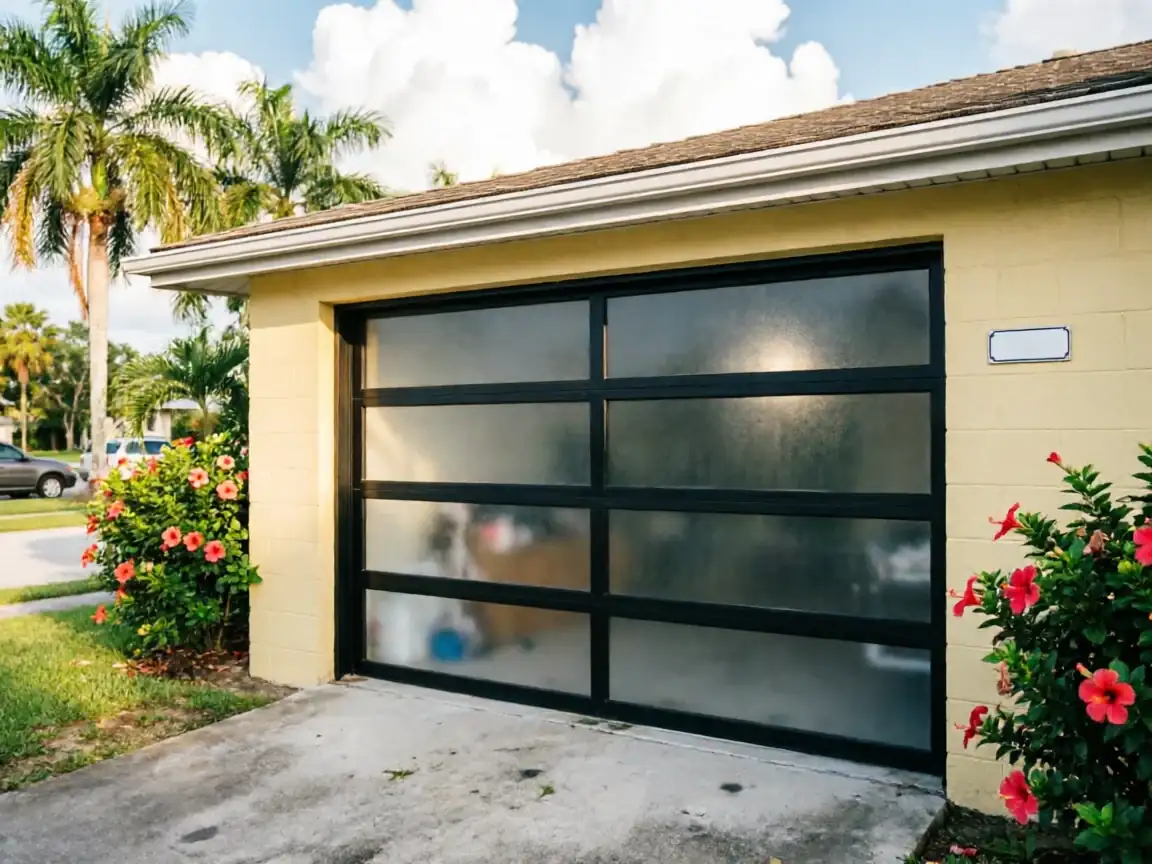
What You Are Seeing
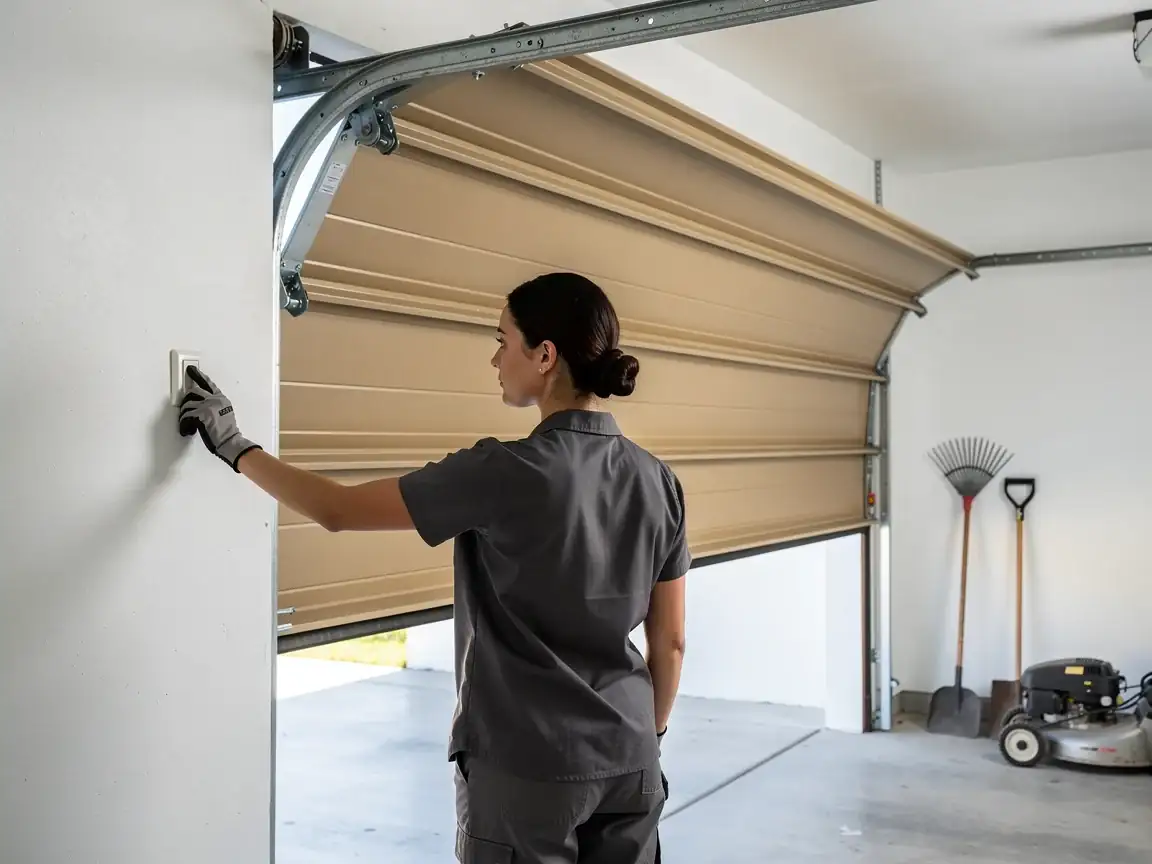
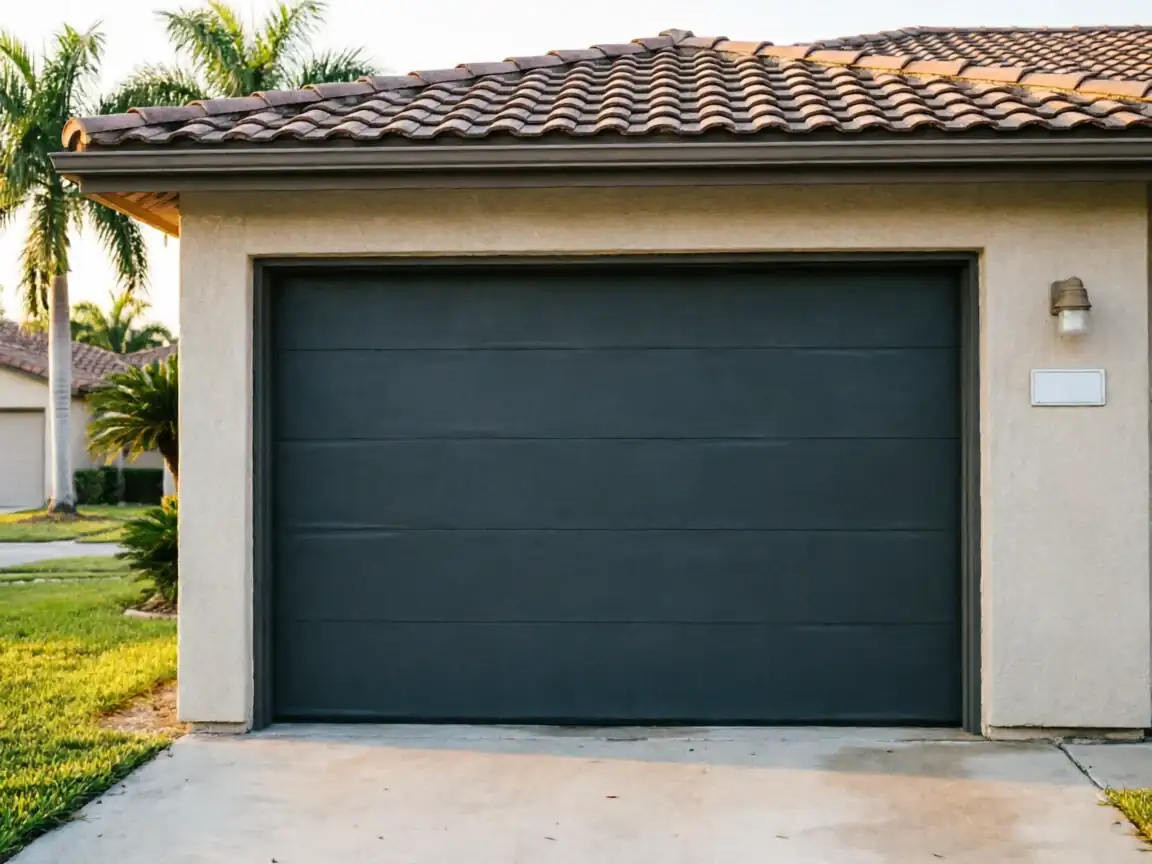
The call we get from this pocket of Zephyrhills South is almost always about one panel, not the whole door: a dent from a trailer hitch backing in wrong, a bottom section soft and bowed from standing water, or a seam that's started to separate at the hinge line. That's the tell of a door that's doing its job but taking a beating on one section only.
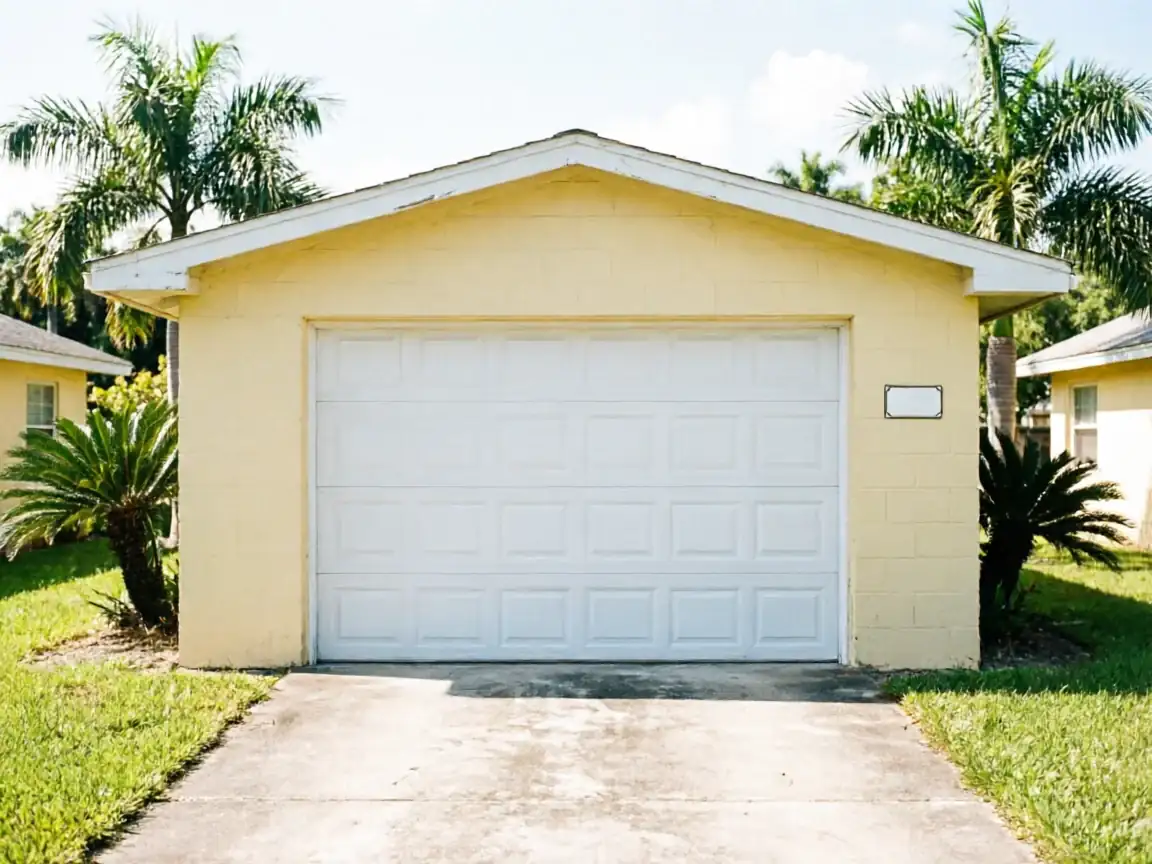
Median year built here runs around 1985, a touch earlier than the 1988 median across the wider service area. Doors from that stretch are usually steel, two-sided with a foam core sandwiched in between, and the foam is the part that fails first. Once moisture gets behind a dented panel, the foam starts to crumble and the panel stops being rigid. You'll notice it as a flex when the door runs, or a rattle that wasn't there a year ago. On a door this age, that's not cosmetic - it's the panel losing its structural job, and it only gets worse until that section is swapped.
What Can Go Wrong
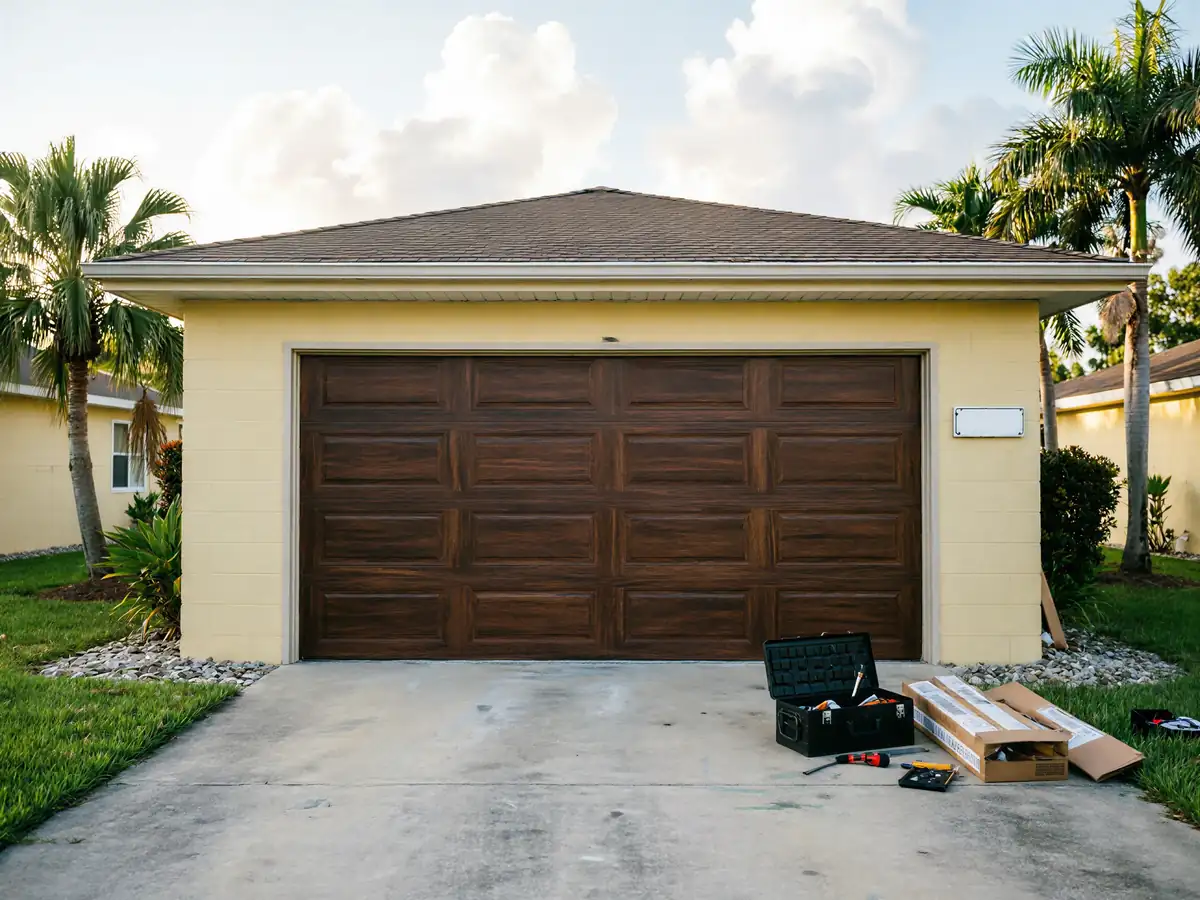
Replacing one panel sounds simple until you find out the door's discontinued, which is common on a door built around 1985 - the manufacturer may not still make that exact profile or color. When that happens you're choosing between a mismatched panel that's close enough, or replacing more sections than the one that's actually damaged, just to keep the door looking uniform.
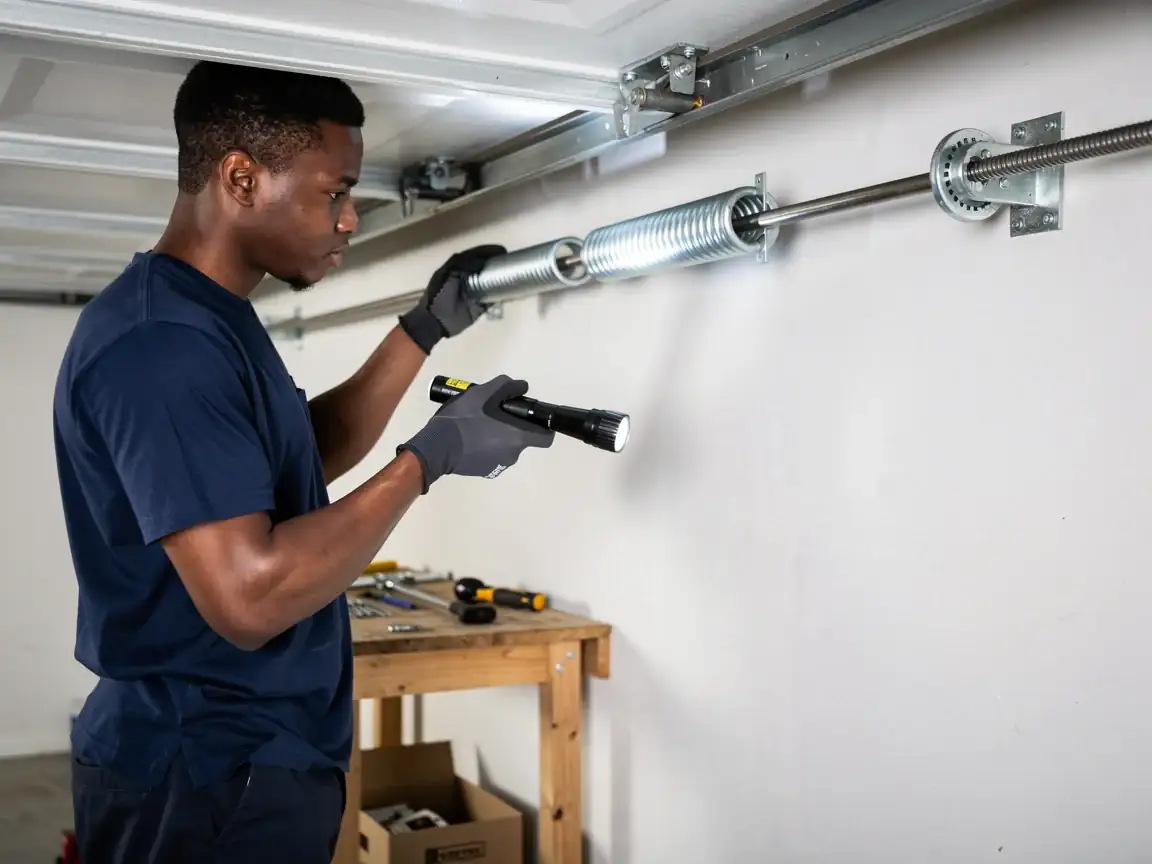
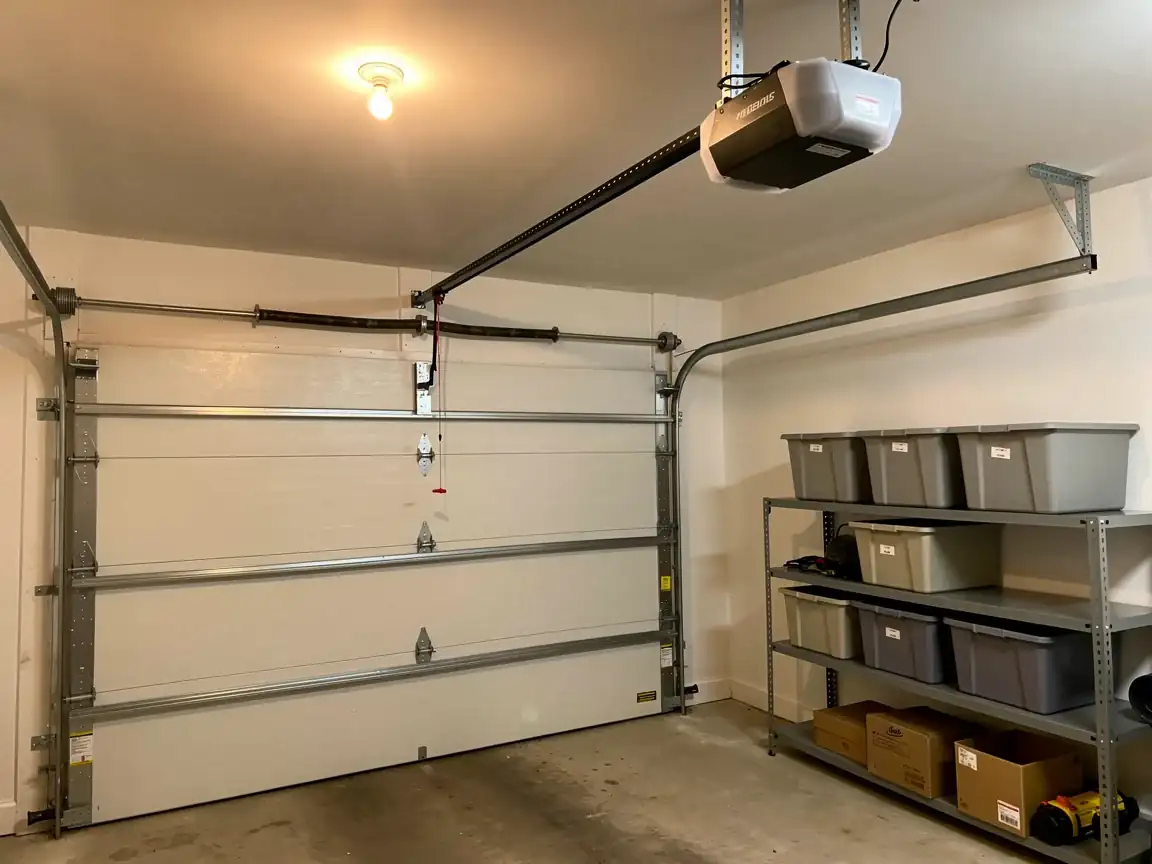
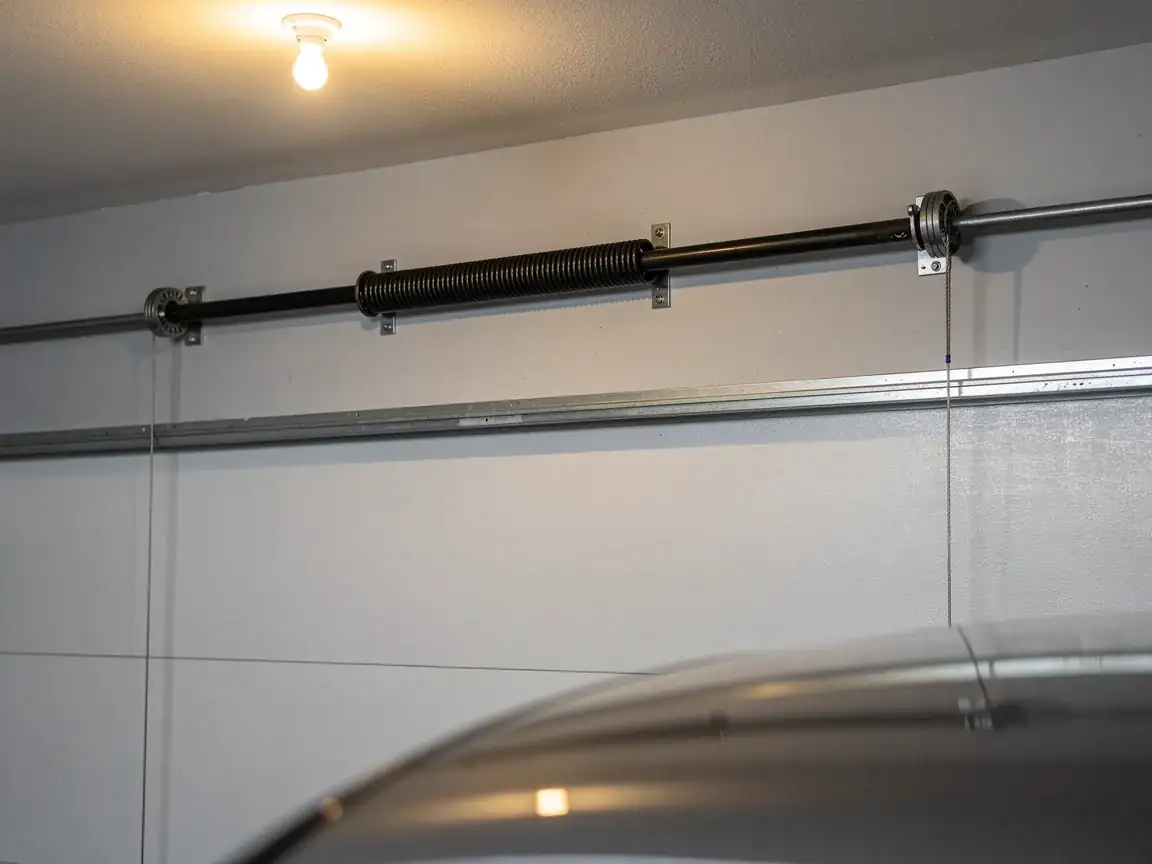
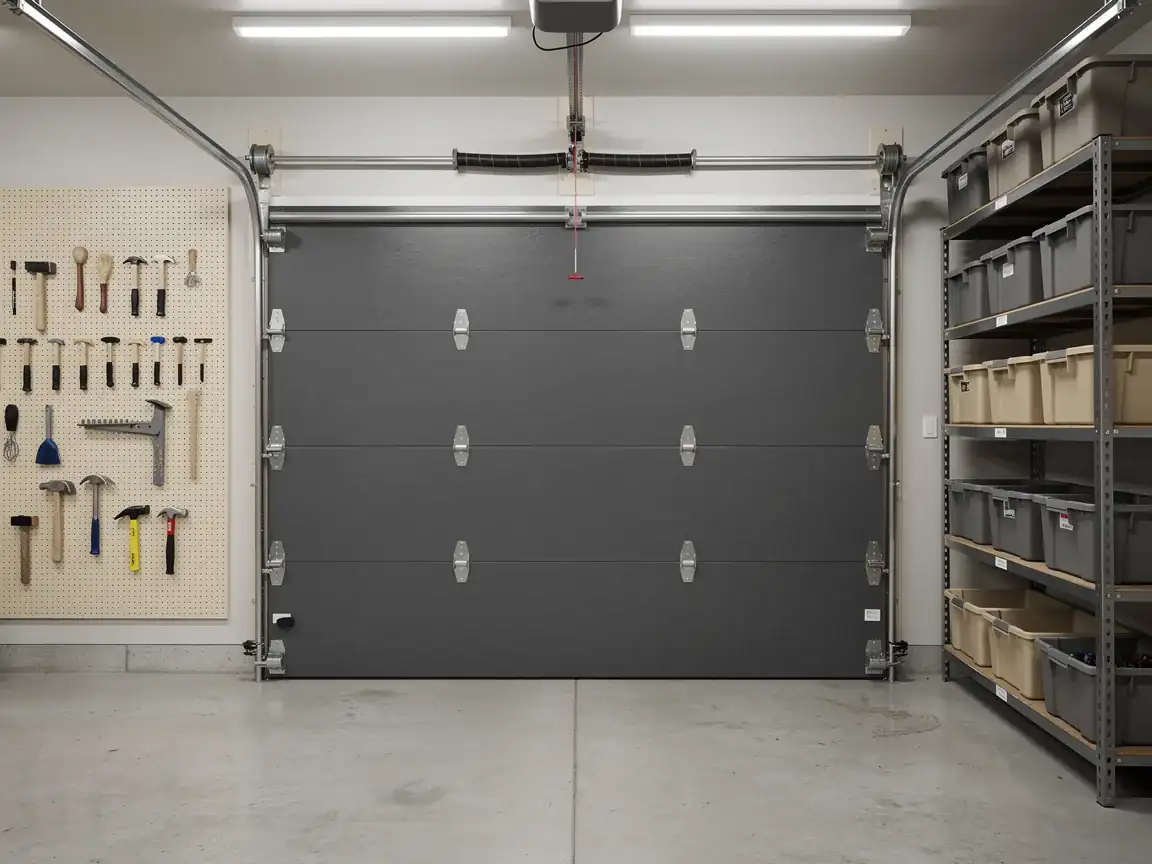
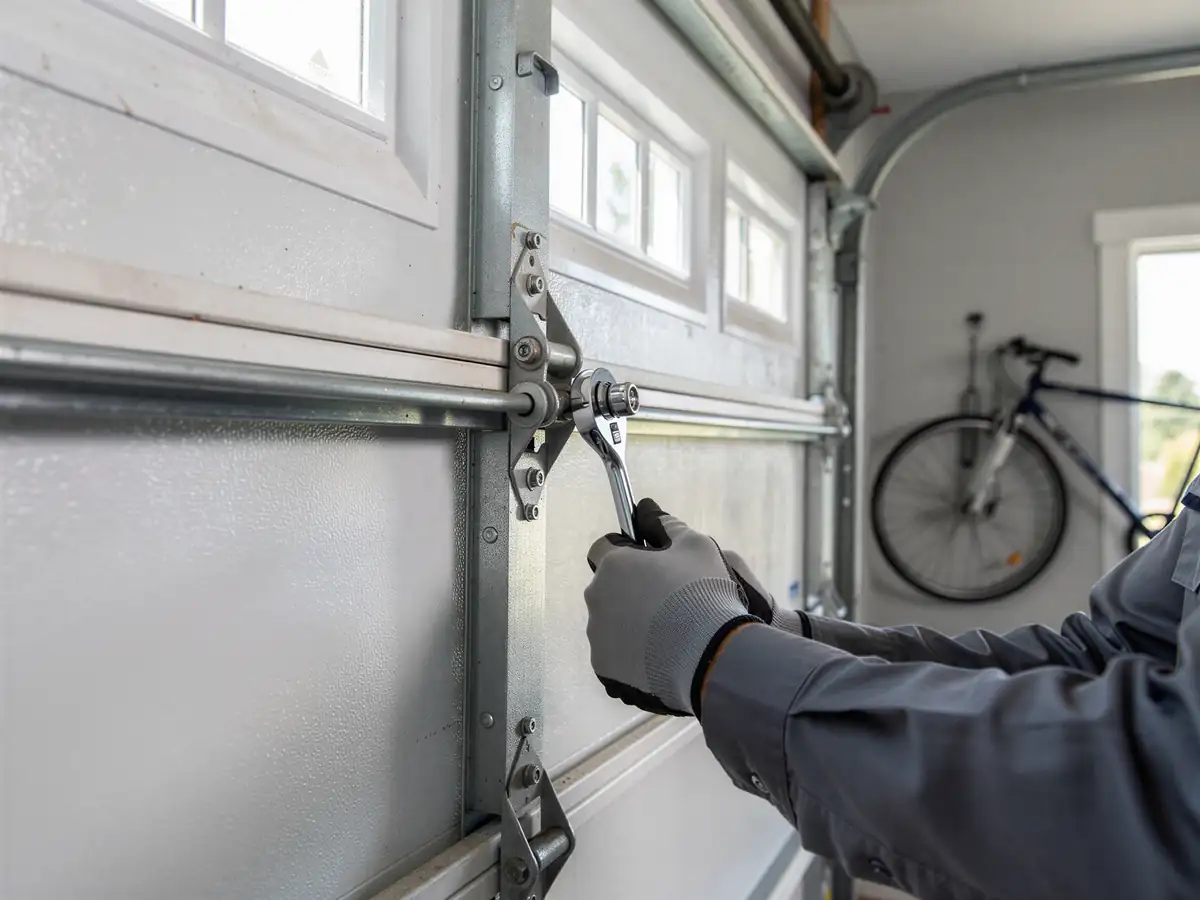
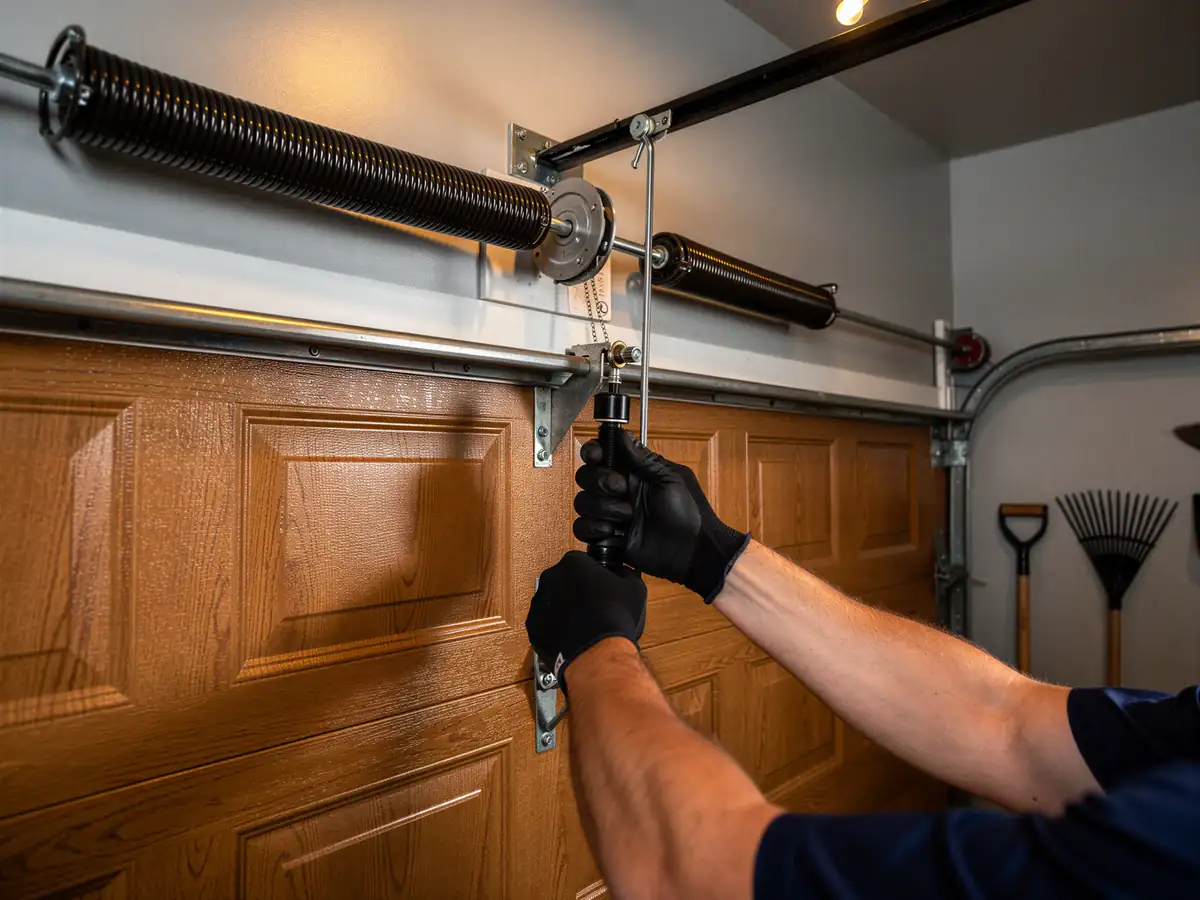
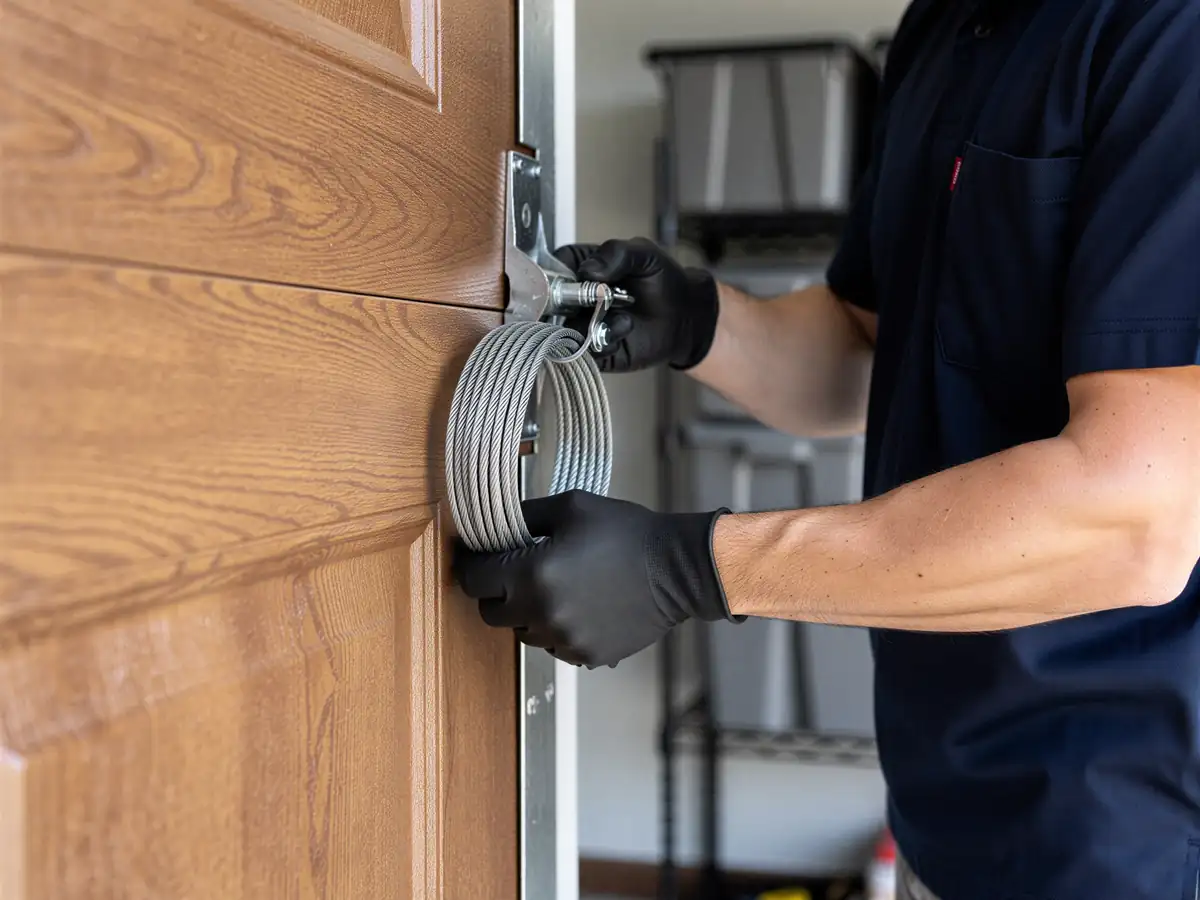
There's a mechanical risk too. Torsion springs and track are sized to the weight of the door as built. Swap a thin, old panel for a heavier modern insulated one and the spring that's held for decades can suddenly be undersized, which shows up as a door that won't open all the way or slams down on its own. We check spring tension any time we touch a panel, because skipping that step is how a simple fix turns into a cable or spring failure a few weeks later.
Can You Do This Yourself
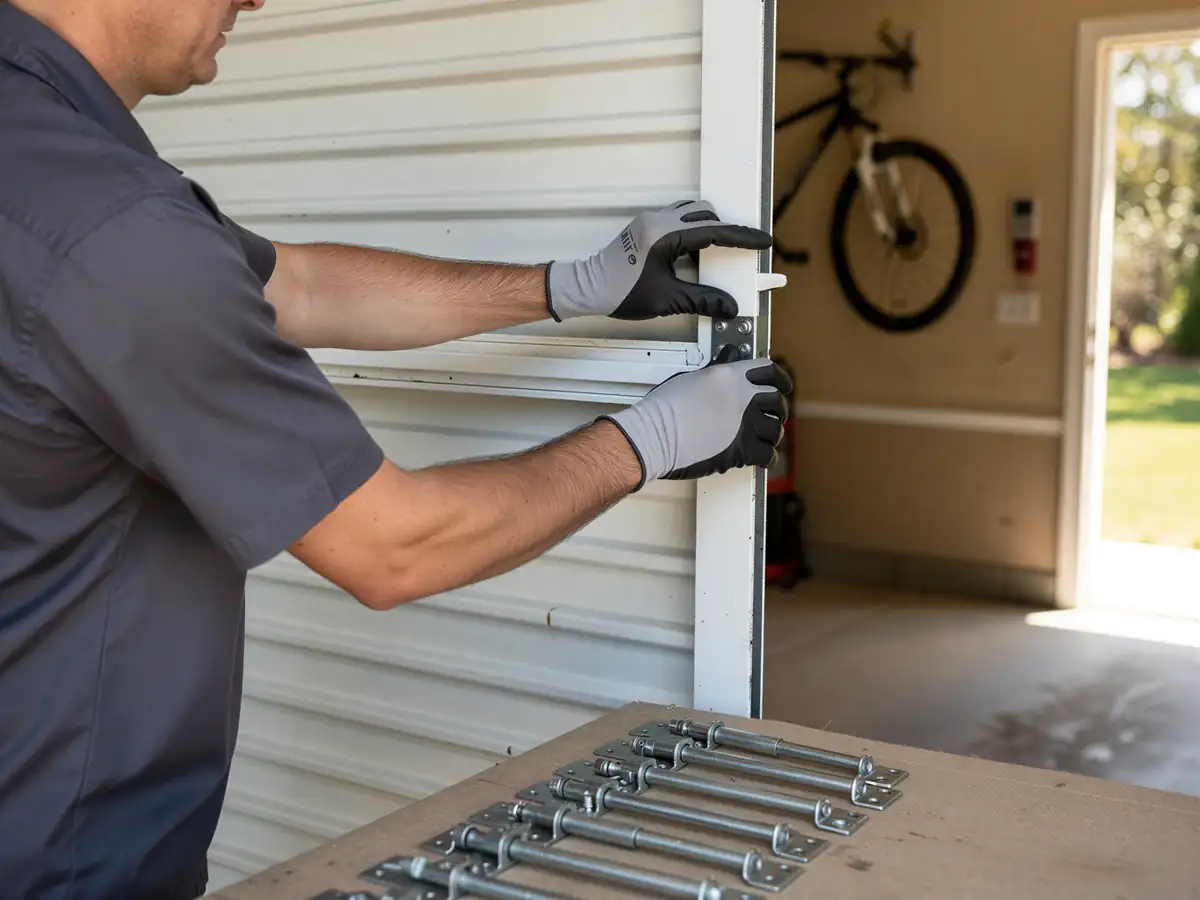
A single hardware-store panel kit can work if the door is a common, still-produced model and the damage is cosmetic
A scuff, a shallow dent, nothing structural. If that's your situation, we won't talk you out of trying it.
Where it gets hard is matching an older steel panel's exact rib pattern and finish
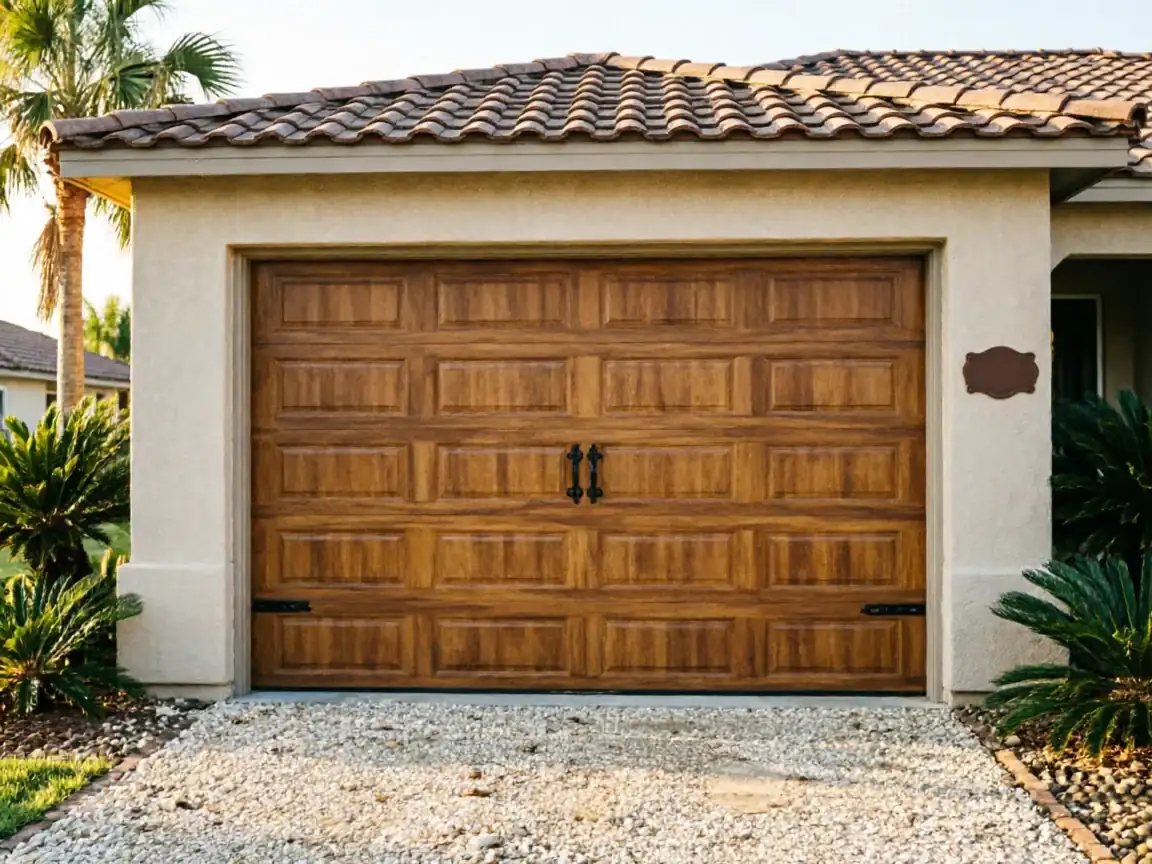
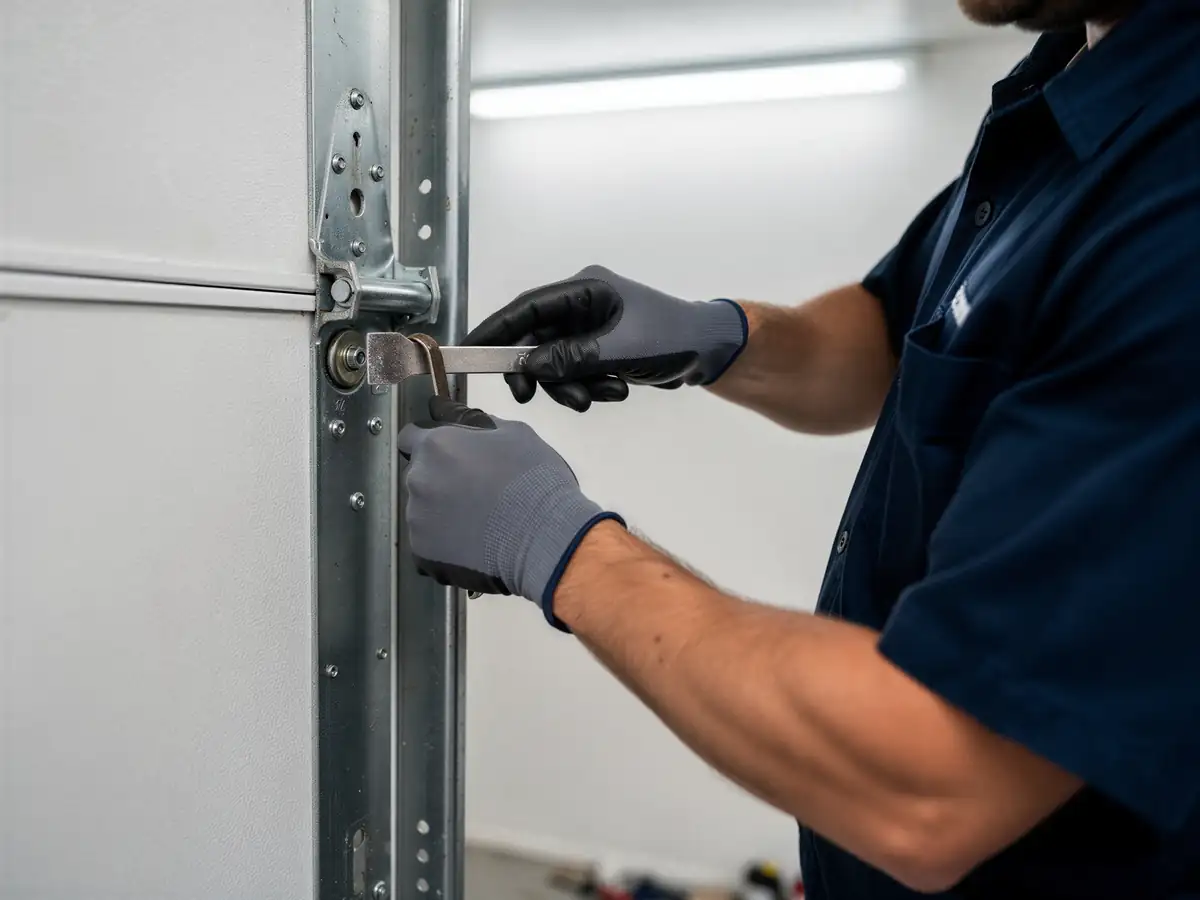
And getting the panel seated so it doesn't throw the door out of square on the track. Misaligned panels bind rollers and wear the track edge fast. Our honest limit here: if the panel is discontinued or the door's wood or has custom trim, we tell you plainly whether a patch panel is worth it or whether you're better off putting that money toward replacing the section properly instead of fighting a mismatch for years.
Why This Fails Locally
Zephyrhills South sits about 8 miles from our Wesley Chapel shop, and the roughly 2,631 households here skew toward an older, more price-sensitive stock than some of the newer subdivisions we also cover. Median household income here runs close to $39,884, well under the $63,145 median across the full service area, which changes the math on panel repair versus full door replacement - a lot of owners here want the door fixed, not swapped, and that's a reasonable call on a door that's otherwise sound.
The mild temperate climate band this area sits in means we're not dealing with freeze-crack failures, but humidity still finds its way into any dent that's holding water against bare steel. On a 1985-era door, that steady low-grade moisture exposure over decades is usually why one panel fails years before the rest of the door shows its age.